ADHD Behavioral Interventions: A Comprehensive Guide
Children with ADHD can get a lot of help from two main types of behavioral treatments that teach them how to control their hyperactivity, impulsive actions, and trouble paying attention. About 6.1 million children in the U.S. have been diagnosed with ADHD, according to the CDC, showing how many kids need this kind of support. These treatments don’t make ADHD go away, but they give children easy ways to handle their challenges better every day.
Understanding Behavioral Therapy for ADHD
Behavioral interventions serve two primary purposes: helping children develop organizational and focus strategies, and reducing disruptive behaviors that interfere with school performance, social relationships, and family harmony. Some children with severe ADHD symptoms may need both behavioral therapy and medication, while others find that behavioral training alone provides sufficient support for academic and home success.
A key advantage of behavioral therapy is its lasting impact. Unlike ADHD medications that only work while being taken, behavioral interventions teach lifelong skills that continue benefiting children as they mature into adulthood.
How to Address Behavioral Challenges in Children With ADHD
Parent Training Programs
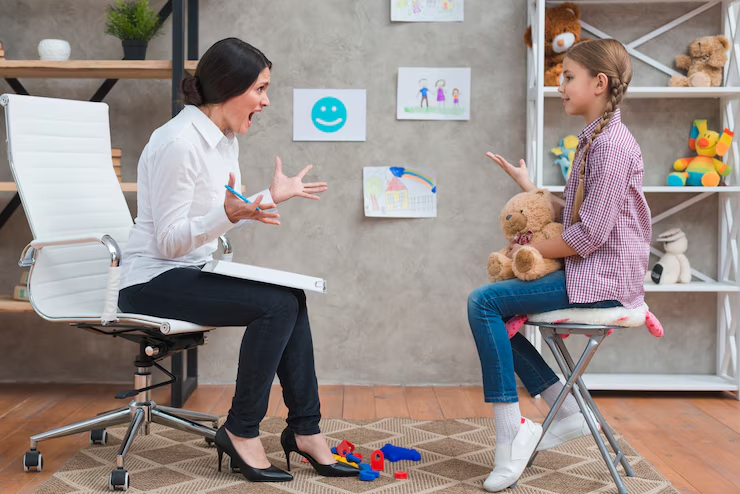
When kids act without thinking or have trouble following rules, it can cause problems at home and school. Parent training is a special kind of therapy that helps parents and kids work together to make things better. In this program, parents learn new ways to talk, listen, and respond to their children. This helps kids learn self-control and build stronger, happier relationships with their parents and teachers.
These skills also boost emotional bonding and communication within the family, which is essential for children managing ADHD symptoms.
Parent training is very helpful for children with ADHD because they often find it hard to stay calm, follow directions, or avoid tantrums. As they practice new behaviors at home, they also start behaving better in school. These training sessions are usually led by a child psychologist who helps families learn step by step.
Effective Parent Training Methods
There are a few well-known parent training programs that work really well:
- Parent-Child Interaction Therapy (PCIT) – helps parents and kids spend special time together and learn better ways to communicate.
- Parent Management Training (PMT) – teaches parents how to use praise and fair consequences to guide their child’s behavior.
- Positive Parenting Program (Triple P) – shows parents how to stay calm and use encouragement instead of punishment.
In these programs, parents learn how to praise good behavior, give rewards for effort, and use clear rules and consequences when needed. Over time, this helps reduce fights and tantrums, improve family peace, and make parents feel less stressed.
Children with ADHD often hear more criticism than praise, so when adults focus on their good behavior, it makes them feel proud and motivated. Even children who have faced problems like being sent home from preschool or feeling left out can show amazing improvement when their parents join these training programs.
Effective Behavioral Treatments for Children With ADHD: A Comprehensive Comparison
Here’s a comparison table based on the content about behavioral treatments for kids with ADHD:
| Treatment Type | Target Areas | Key Methods/Programs | How It Works | Benefits & Outcomes |
| Parent Training Programs | Self-control, following directions, reducing tantrums, building stronger relationships | Parent-Child Interaction Therapy (PCIT), Parent Management Training (PMT), Positive Parenting Program (Triple P) | Parents learn new ways to talk, listen, and respond to children; Use praise and fair consequences; Focus on encouragement instead of punishment; Led by child psychologist | Reduces fights and tantrums; Improves family peace; Reduces parental stress; Children behave better at home and school; Over 90% report symptom improvement; Reduces need for medication |
| Daily Report Card System | Academic performance (task completion), social behavior (reducing teasing/aggression), classroom conduct (following rules, staying seated, listening) | Collaborative approach between parents and teachers with individualized behavioral goals | Teachers evaluate daily performance on each goal; Award stars or checkmarks for positive behaviors; Children earn rewards at home (like screen time) for accumulating positive marks | Provides clear structure and motivation; Works well for children from preschool through age 12; Promotes positive behavior through goal-setting and regular feedback |
| Skills-Based Interventions (Executive Function Support) | Planning, organization, decision-making, emotional regulation, task switching, learning from mistakes | Step-by-step guidance from learning experts; Practical strategies using children’s strengths | Teaches practical ways to manage schoolwork and home tasks; Helps children use smart tricks to handle difficult areas; Focuses on developing executive functioning skills | Children learn lifelong organizational and focus strategies; Lasting impact that continues into adulthood (unlike medication that only works while being taken); Significantly boosts social skills and academic performance |
| Combined Behavioral Therapy | Hyperactivity, impulsive actions, trouble paying attention, disruptive behaviors | Combination of parent training, school-based interventions, and skills development | Addresses multiple areas simultaneously through family and school collaboration | Reduces inattention, hyperactivity, and conduct problems; Improves school performance, social relationships, and family harmony; In India, over 80% discontinue medication, highlighting importance of behavioral approaches |
Early Intervention Strategies
Daily Report Card System
Young children with ADHD respond well to structured systems that promote positive behavior through specific goal-setting, regular feedback, and reward systems. The Daily Report Card exemplifies this collaborative approach between parents and teachers.
Teachers establish individualized behavioral goals targeting the child’s most challenging areas, which might include:
- Academic performance (task completion)
- Social behavior (reducing teasing or aggression)
- Classroom conduct (following rules, remaining seated, listening to instructions)
Teachers evaluate the child’s daily performance on each goal, awarding stars or checkmarks for positive behaviors. Accumulating sufficient positive marks throughout the day earns the child rewards at home, such as screen time or other preferred activities.
This systematic approach benefits children from preschool through age 12, providing clear structure and motivation for behavioral improvement.
Helping Kids Build Better Focus and Executive Function Skills
Skills-Based Interventions
This type of help teaches children with ADHD how to manage schoolwork and home tasks in simple, practical ways. Learning experts guide kids step by step so they can use their strengths and learn smart tricks to handle things they find hard.
Executive Function Support
Children with ADHD often struggle with something called executive functioning — these are the skills we use every day to get things done. These skills help kids plan, stay organized, make choices, and manage their feelings. For example, executive function helps you:
- Plan and organize your time and school materials
- Make good decisions
- Switch easily from one activity to another
- Stay calm when things don’t go your way
- Learn from past mistakes and do better next time
Real Stats About ADHD Behavioral Treatment in India
- ADHD affects about 11.32% of Indian children, with boys being more commonly diagnosed (66.7%). Children ages 9 and 10 show the highest rates.
- Parent training programs have shown to significantly reduce inattention, hyperactivity, and conduct problems in Indian children with ADHD.
- Over 90% of children undergoing behavioral interventions report improvement in symptoms, often reducing the need for medication.
- Discontinuation of ADHD medications is very common in India (over 80%), stressing the importance of accessible behavioral therapies and parental training programs.
- Family and school collaboration in behavioral treatments significantly boosts children’s social skills and academic performance.
Skills-based interventions specifically target these executive function deficits, providing children with concrete tools and strategies to improve their academic performance and daily functioning. By addressing these foundational skills, children develop greater independence and confidence in managing their responsibilities across different environments.
Skills-based interventions help children with ADHD improve focus, daily tasks, and confidence. For personalized support, visit our Special Education Center in Noida or Occupational Therapy Clinic in Noida for sensory and motor skills help.
Speech therapy improves communication, social skills, and learning. In Delhi, centers like Continua Kids and Sounderic offer personalized therapy plans for children with ADHD.
Combining behavioral and speech therapy gives complete support for kids to grow at home and school.
Recent Event at Listening Ears
Listening Ears recently hosted an ADHD Awareness and Parent Coaching Workshop in Delhi, where families learned simple, science-backed strategies to manage hyperactivity and improve focus at home. The session included live demonstrations of reward-based behavior systems and calm-down techniques that parents can easily use in daily routines.
Our Expertise in Behavioral Therapy
Our Child Psychology and Behavioral Therapy Unit specializes in helping children with ADHD and attention challenges build focus, confidence, and self-control through structured play, parent training, and school-based collaboration. We believe that with the right tools and support, every child can thrive both at home and in the classroom.
Final Note:
Helping your child with ADHD can feel like a big challenge, but you’re not alone! Just like learning to ride a bike takes practice, kids with ADHD can learn amazing skills to focus better, stay calm, and do great in school.
At Listening Ears, we understand that every child is special and learns differently. We help parents and kids find simple ways to handle challenges together.
Remember: Small steps every day lead to big wins! Your child can do wonderful things with the right support.
FAQ's
What are behavioral treatments for ADHD?
Behavioral treatments teach kids ways to control their actions, focus better, and behave well at home and school. They don’t cure ADHD but help kids manage it every day.
How do parent training programs help?
Parent training shows moms and dads how to praise good behavior, give fair consequences, and help kids learn self-control. This makes home life calmer and kids behave better in school.
What is the Daily Report Card system?
It’s a simple chart where teachers give stars or checkmarks for good behavior and task completion. Kids can earn rewards at home for doing well.
What are skills-based interventions?
These teach kids step-by-step ways to organize schoolwork, plan tasks, make decisions, and manage emotions. They help kids become more independent.
What is executive functioning?
Executive functioning is a set of daily skills like planning, organizing, staying calm, making choices, and learning from mistakes. Kids with ADHD often need help improving these skills.
Can behavioral therapy replace medicine?
Sometimes yes, sometimes no. Some kids do well with therapy alone, while others may also need medication. Therapy teaches skills that last long, even after medicine is stopped.
How common is ADHD in India?
Around 11% of Indian children have ADHD. Boys are diagnosed more often, and ages 9–10 show the highest rates.
Does behavioral therapy really work?
Yes! Over 90% of children show improvement in focus, behavior, and schoolwork after behavioral treatments. Working together with parents and teachers gives the best results.