What Is Hearing Impairment?
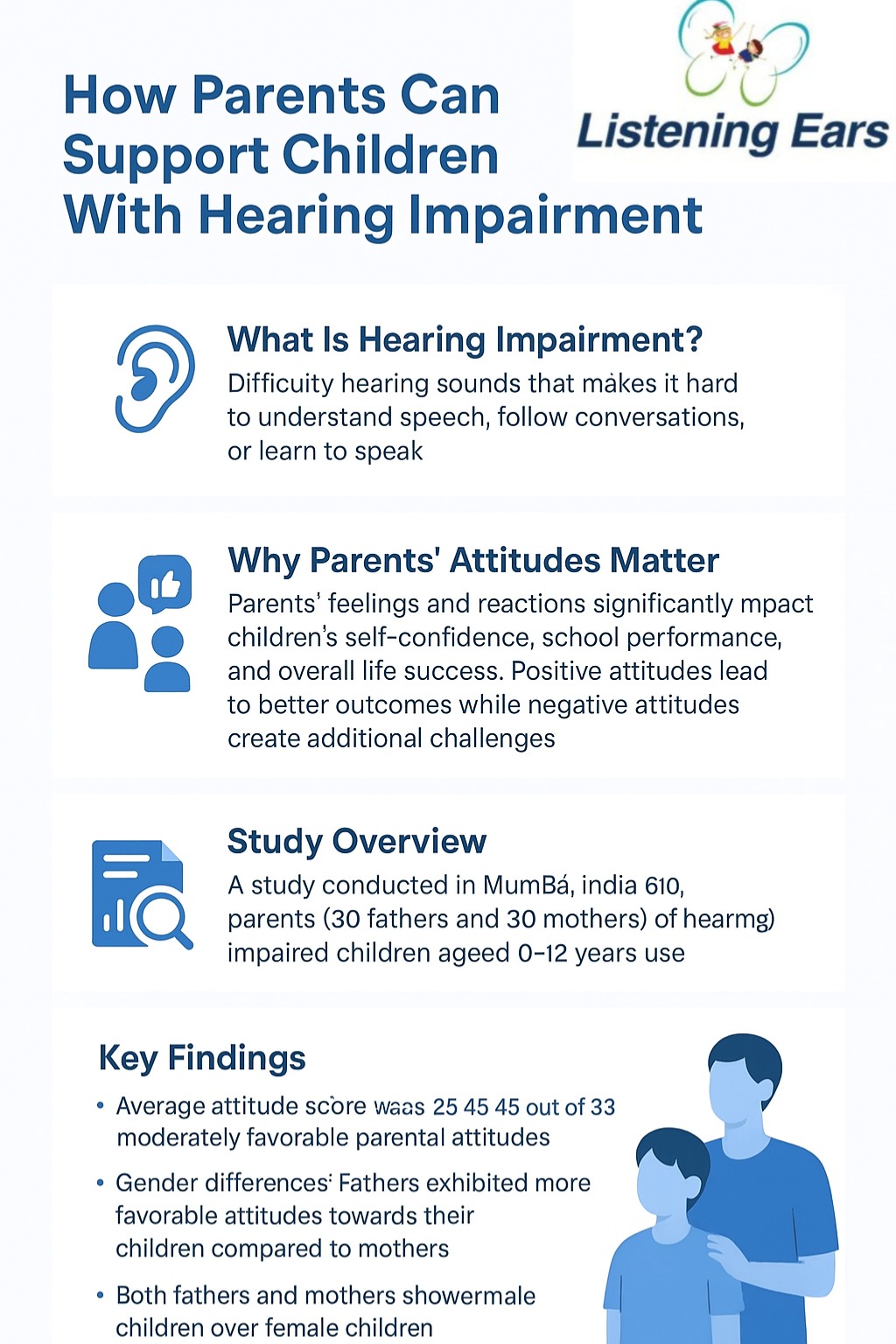
Hearing impairment means a child has difficulty hearing sounds. This can make it hard for them to understand speech, follow conversations, or learn to speak.
Why Do Parents’ Attitudes Matter?
Parents’ feelings and reactions play a big role in how children with hearing impairment feel about themselves and how well they do in school and life. If parents are supportive and positive, children are more likely to feel confident and do better. But if parents are upset or negative, it can make things harder for the child.
Studies also show that hearing loss impacts school performance, especially when emotional and family support is missing. Encouraging and consistent parenting can make therapy outcomes much stronger
Study Overview
A study conducted in Mumbai, India, assessed the attitudes of 60 parents (30 fathers and 30 mothers) towards their hearing-impaired children aged 0–12 years. The “Parental Attitudes Scale,” a self-assessment tool with a reliability coefficient of 0.67, was used to evaluate these attitudes.
Key Findings
- Overall Attitude Score: The average score was 25.45 out of 33, indicating moderately favorable parental attitudes.
- Gender Differences: Fathers exhibited more favorable attitudes towards their children compared to mothers. Additionally, both fathers and mothers showed more favorable attitudes towards male children than female children. However, this gender bias was statistically significant only among fathers.
- Influence of Education: Parents with higher educational levels demonstrated more positive attitudes towards their hearing-impaired children.
Implications
These findings underscore the importance of fostering positive parental attitudes to support the development and well-being of children with hearing impairment. Interventions aimed at enhancing parental understanding and acceptance can facilitate better therapeutic outcomes and integration of these children into society
It’s also important to consider how siblings of hearing-impaired children experience emotional and attention challenges—addressing the entire family’s well-being leads to better progress for the child.
🧠 Helping Parents Help Their Children
To support children with hearing impairments, it’s important to:
- Educate Parents: Teach them about hearing impairments and how to support their child.
- Encourage Positive Attitudes: Help parents see the strengths and abilities of their child.
- Provide Counseling: Offer support to parents to deal with their feelings and learn how to help their child.
Parents looking for therapy options can explore speech therapy in Delhi, & Speech therapy in Noida where professionals guide both children and families in improving communication and confidence.
Real-Life Example
In a study in Kerala, India, 99% of parents agreed that their children with hearing impairments should have the chance to work in regular jobs when they grow up. This shows that many parents want their children to have the same opportunities as others.
Remember: Parents’ attitudes can shape their child’s future. By being positive and supportive, parents can help their children with hearing impairments lead happy and successful lives.
To learn how therapy and parental guidance work together, you can reach out to Listening Ears for more support and expert advice.
Building Awareness Together
Listening Ears – Oishi Care recently organized a Healthy Athletes Screening Camp in collaboration with Special Olympics Bharat at Tihar Jail’s Nirmal Chhaya Shelter Home. The initiative promoted holistic wellness through activities like Healthy Hearing, Feet Fitness, and Strong Minds. Events like these show how awareness, inclusion, and health education can go hand in hand — inspiring parents to see that early care and regular checkups truly shape a child’s communication and emotional growth.
Voice of Experience
Ms. Bakul Chaudhary, Child Psychologist and Founder of Listening Ears, believes that understanding a child’s emotions is just as vital as improving their hearing skills. She says, “We strive for holistic growth and development of children — understanding their unique needs and helping them lead independent lives through early identification and intervention.” Her approach helps families build confidence, trust, and hope throughout their child’s therapy journey.
Here’s a table with a title you can copy and paste directly into Google Docs:
Parental Support for Children with Hearing Impairment: Key Insights
| Category | Details |
| What is Hearing Impairment? | Difficulty hearing sounds that makes it hard to understand speech, follow conversations, or learn to speak |
| Why Parents’ Attitudes Matter | Parents’ feelings and reactions significantly impact children’s self-confidence, school performance, and overall life success. Positive attitudes lead to better outcomes while negative attitudes create additional challenges |
| Study Overview | Study conducted in Mumbai with 60 parents (30 fathers, 30 mothers) of hearing-impaired children aged 0-12 years using Parental Attitudes Scale with 0.67 reliability coefficient |
| Key Findings | Average attitude score was 25.45 out of 33 showing moderately favorable attitudes. Fathers showed more favorable attitudes than mothers. Both parents favored male children over female children, with gender bias statistically significant among fathers. Higher education levels correlated with more positive attitudes |
| How Parents Can Help | Educate themselves about hearing impairments, encourage positive attitudes, focus on child’s strengths and abilities, seek counseling support, learn effective communication strategies, provide consistent support |
| Real-Life Example | Kerala study showed 99% of parents believed their hearing-impaired children should have opportunities for regular employment, demonstrating widespread parental support for equal opportunities |
| Long-term Impact | Positive parental attitudes lead to better therapeutic outcomes, successful social integration, increased child confidence, improved educational achievement, and happier, more successful lives |
FAQ's
What is hearing impairment?
Hearing impairment means a child cannot hear sounds clearly. It can make it hard to understand words, follow conversations, or learn to speak.
Why is it important for parents to have a positive attitude?
When parents are positive and supportive, children feel more confident and do better at school and in life. Negative attitudes can make children feel sad or less confident.
Can parents’ education affect their attitude?
Yes! Parents who have more education tend to have more positive attitudes toward children with hearing impairments.
Do fathers and mothers feel the same way about their children?
No. In some studies, fathers were more positive than mothers, and both parents were often more positive about boys than girls.
How can parents help their child learn to speak better?
Parents can help by talking clearly, using gestures, repeating words, being patient, and giving lots of encouragement.
Can counseling help parents?
Yes. Counseling helps parents understand their child better, learn how to be supportive, and feel more confident about helping their child.
Will positive parenting help my child succeed?
Definitely! Children with supportive parents usually feel confident, do better in school, and make friends more easily.
Can children with hearing impairment have normal jobs when they grow up?
Yes! Most parents want their children to have the same chances as other kids. With support, children with hearing impairments can have successful careers.