Speech development timelines vary, but concerns at an early age should always be discussed with a qualified speech therapist to guide safe and effective support.
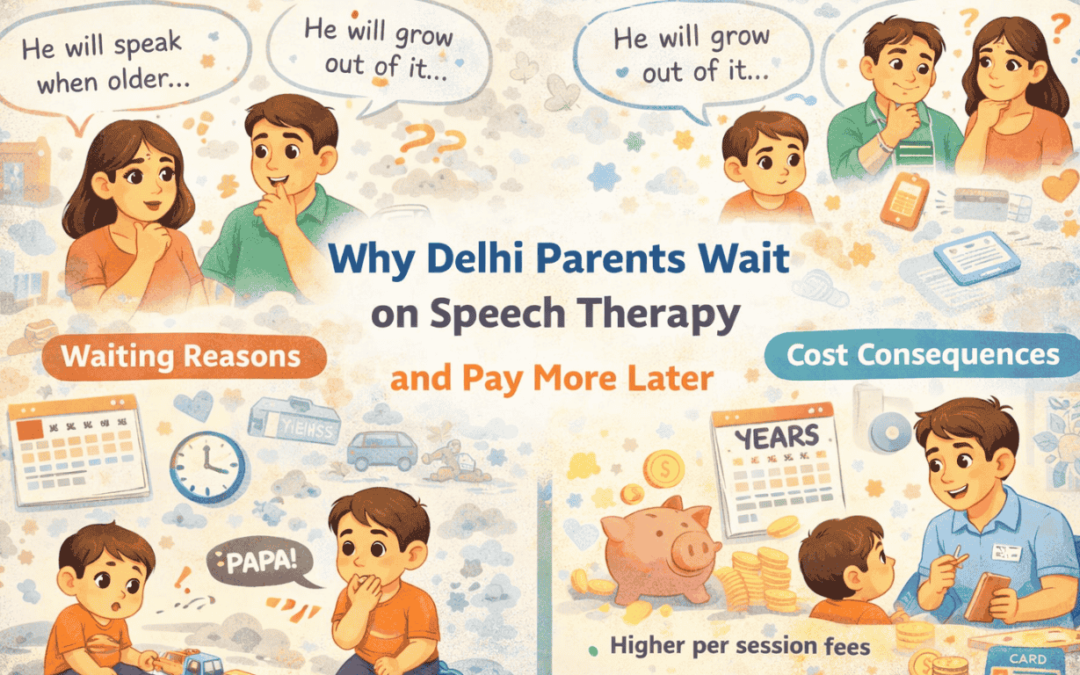
Delhi parents often delay speech therapy because they think their child will “start talking on their own,” fear social judgment, or don’t clearly understand early speech signs. This delay usually makes therapy longer, harder, and more expensive later—emotionally, academically, and financially.
Why This Topic Matters for Delhi Families
Delhi is a fast-moving city. Parents juggle long work hours, traffic, school pressure, and family expectations. In this rush, early speech concerns can feel small or “temporary.” But speech and language development works on a timeline. When that timeline is missed, children may struggle in school, social life, and confidence—issues that cost far more than early therapy.
Understanding Speech Therapy in Simple Words
Speech therapy helps children learn how to:
- Speak clearly
- Understand language
- Express needs and feelings
- Communicate with others confidently
It is not only for children who don’t speak at all. It also helps children who:
- Speak late
- Mix sounds
- Stammer
- Don’t understand instructions
- Avoid talking with others
What Speech Therapy Is NOT
Speech therapy is not punishment. It is not pressure. It is not forcing children to talk.
It is play-based, child-friendly, and designed to work with a child’s natural learning style.
How Common Are Speech Delays?
Real and widely accepted statistics show:
- Around 1 in 10 children worldwide has some form of speech or language delay
- Studies suggest 5–8% of preschool children need speech-language support
- Boys are 2–3 times more likely than girls to have speech delays
- Early therapy before age 5 shows significantly better outcomes than late intervention
In metro cities like Delhi, speech delays are rising due to:
- Reduced parent-child interaction time
- Excessive screen exposure
- Nuclear families with limited communication models
The Top Reasons Delhi Parents Delay Speech Therapy
“My Child Is Just a Late Talker”
This is the most common reason. Many parents believe speech will improve naturally. While some children do catch up, many don’t—and there’s no safe way to guess which child will.
By age:
- 12 months: Should babble and use gestures
- 18 months: Should say 10–20 words
- 2 years: Should use two-word phrases
- 3 years: Speech should be mostly understandable
Missing these milestones needs attention.
Fear of Social Labels
Some parents worry:
- “People will say something is wrong with my child”
- “Relatives will judge our parenting”
- “School might label my child”
The truth is: early therapy prevents labels later. Children who don’t get help may face more noticeable struggles in school.
Comparing with Other Children
In Delhi’s social circles, comparisons are constant. Parents hear:
- “My nephew spoke at 4 years”
- “Boys speak late”
- “Don’t worry, it’s normal”
Every child is different, but development science is not based on stories—it’s based on patterns and milestones.
Busy Urban Lifestyle
Long office hours, traffic, and packed schedules delay appointments. Many parents plan to “check next month,” which turns into next year.
Confusion Between Speech Delay and Intelligence
A big myth is that speech delay means low intelligence. In reality, many children with speech delays are very intelligent but struggle to express themselves.
Why Delhi Parents Feel Extra Pressure
In Delhi, parents face strong social opinions, school competition, and family comparisons.
This pressure often leads to denial instead of early action.
Unfortunately, development does not wait for social comfort.
Why Waiting Costs More Than Early Therapy
Longer Therapy Duration
Early therapy (ages 2–4):
- Fewer sessions
- Faster progress
- Easier learning through play
Late therapy (after 5–6 years):
- More sessions needed
- Slower progress
- Child may resist therapy
Academic Struggles
Speech delays often affect:
- Reading
- Writing
- Understanding questions
- Classroom participation
This can lead to extra tuition, special support, and school stress.
Emotional and Social Cost
Children who struggle to communicate may:
- Feel frustrated
- Avoid talking to peers
- Show anger or withdrawal
- Develop low confidence
These emotional effects often need additional counseling later.
Higher Financial Cost
Early speech therapy is usually short-term and focused. Delayed therapy may require:
- Combined speech + occupational therapy
- Longer treatment plans
- Special education support
Early help saves money in the long run.
What Actually Changes When Therapy Starts Early
Early therapy:
- Works with a flexible brain
- Prevents academic struggles
- Reduces frustration at home
- Builds confidence before school pressure begins
Real Expertise Insight
Speech-language pathologists agree on one key point:
“The brain is most flexible before the age of 6.”
This means:
- Learning new sounds is easier
- Habits are not fixed
- Progress happens faster
Once a child grows older, wrong speech patterns become habits—and habits are harder to change.
A Common Delhi Scenario
A child who starts therapy at 2.5 years may need only a few months of support.
The same child starting at 6 years may need years of therapy, academic help, and emotional support.
The difference is timing, not the child.
Early Therapy vs Late Therapy Comparison Table
| Factor | Early Speech Therapy | Delayed Speech Therapy |
| Best Age | 2–4 years | 6+ years |
| Brain Learning Speed | Very fast | Slower |
| Therapy Duration | Shorter | Longer |
| Child Cooperation | High (play-based) | Lower |
| School Impact | Prevented | Already present |
| Cost Over Time | Lower | Higher |
| Confidence Level | Builds early | Often damaged |
Facts and Myths About Speech Therapy
Myth: Speech therapy is only for severe cases
Fact: Mild delays benefit the most from early therapy.
Myth: Children will outgrow speech problems
Fact: Many speech issues don’t disappear without help.
Myth: Speech delay means low intelligence
Fact: Intelligence and speech are different skills.
Myth: Therapy can wait until school starts
Fact: Waiting reduces therapy success.
Myth: Bilingual homes cause speech delay
Fact: Bilingualism does not cause delays when language exposure is healthy.
The Screen Time Effect in Delhi Homes
Many Delhi children spend:
- 3–5 hours daily on screens
- Limited real conversation time
Screens don’t respond, correct, or encourage speech. Real human interaction is essential for language growth.
Signs Delhi Parents Should Never Ignore
- No words by 18 months
- Not following simple instructions
- Poor eye contact
- Limited gestures
- Speech not clear by age 3
- Frustration during communication
When Is the Right Time to Start?
The right time is the moment you feel something is off. You don’t need a diagnosis to consult a speech therapist. An assessment gives clarity, not labels.
How Listening Ears Helps Children in Delhi
Listening Ears focuses on:
- Early identification
- Child-friendly therapy
- Parent involvement
- Clear progress tracking
The goal is not just speech—but confident communication for life.
Key Takeaway for Parents
Waiting feels safe today, but it quietly increases tomorrow’s struggles. Early speech therapy is not a sign of weakness—it is a sign of responsible parenting.
Final Thoughts
Delaying speech therapy doesn’t save time or money—it multiplies challenges. Delhi parents who act early give their children a stronger voice, better confidence, and smoother school life. Centers like Listening Ears support families with early, effective, and child-friendly speech therapy that truly makes a difference.
FAQs
- At what age should I worry about my child’s speech?
If a child is not meeting speech milestones after 18 months, it is a sign to pay attention. Early signs should not be ignored or compared with others. A simple assessment can give clarity and peace of mind. - Is speech therapy painful or stressful for children?
No, speech therapy is not painful at all. It is play-based and designed like fun activities and games. Children usually enjoy sessions and feel comfortable with the therapist. - How long does speech therapy usually take?
When therapy starts early, improvement can be seen in a few months. Delaying therapy often increases the duration and effort required. Every child’s progress depends on age and consistency. - Can parents help at home along with therapy?
Yes, parents play a very important role in speech improvement. Simple daily activities and practice at home support therapy goals. Children progress faster when parents are involved. - Does screen time really affect speech?
Yes, too much screen time reduces real talking and listening. Screens do not respond or correct a child’s speech. Real human interaction is essential for language development. - Will my child need therapy forever?
No, speech therapy is not lifelong for most children. Once goals are achieved, therapy is gradually stopped. Many children successfully graduate from therapy. - Is speech therapy only for children who don’t talk?
No, speech therapy helps many communication issues. It supports unclear speech, stammering, and difficulty understanding language. Even talking children may need therapy. - Why choose a center like Listening Ears?
Listening Ears focuses on early support and child-friendly therapy methods. Parents are guided at every step of the process. The goal is clear speech and confident communication.