Early Signs of Speech & Language Delay Before First Words
Most parents don’t come in worried about language.
They come in worried about speech.
“She hasn’t started talking yet.”
“He only says a few words.”
“Maybe he’s just taking his time.”
What often gets missed is this: language development begins long before the first word . It starts in everyday moments — when a child looks to share something, responds to their name, points to show interest, or waits for your reaction.
By the time speech becomes a concern, these foundations have often been
forming — or struggling — for quite some time.
This blog is for parents, caregivers, educators, and professionals who want to
understand what truly matters in early language development, what is often overlooked, and when early support can change a child’s developmental path.

Language Develops in Layers, Not Leaps

Children do not suddenly start speaking—they build up to it.
Before speech emerges, children need:

  • Emotional and sensory regulation

  • Social engagement

  • Attention and listening skills

  • Understanding of language

  • Ability to imitate

  • A reason and desire to communicate

When these foundations are weak, speech is often delayed—not due to lack of motivation, but because the system supporting language is not yet ready.

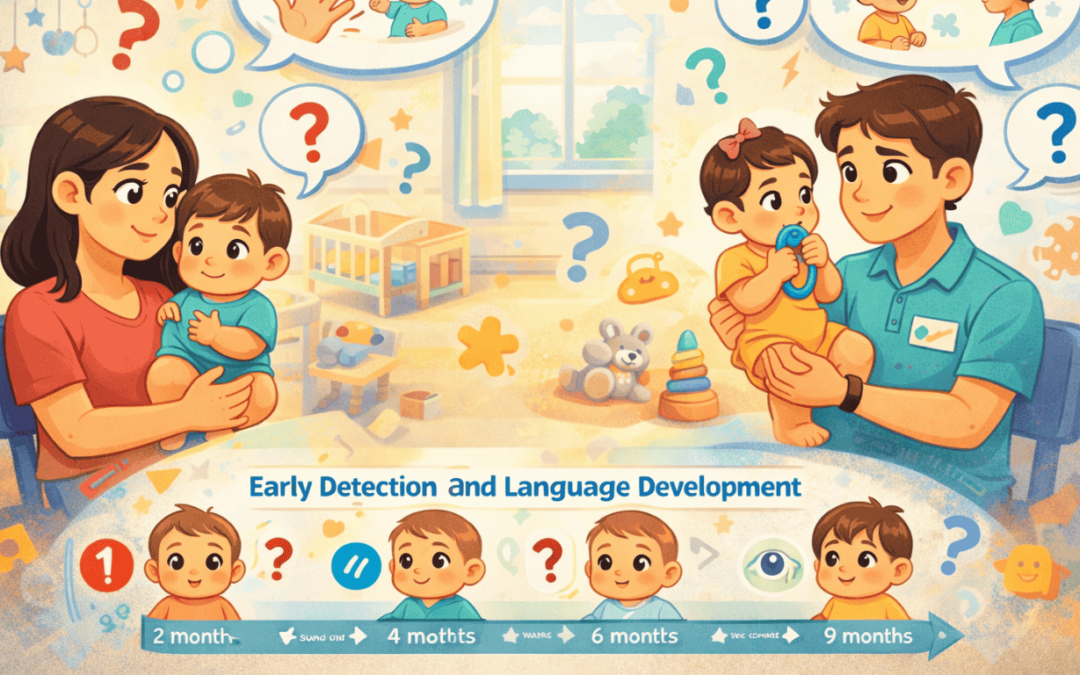
Developmental Milestones Parents Should Notice Early

Every child develops at their own pace, but some early communication milestones help parents understand whether language skills are growing naturally. Missing one milestone may not always be serious, but consistent delays should not be ignored.

Around 6 Months

  • Responds to familiar voices
  • Smiles during interaction
  • Makes cooing or babbling sounds
  • Shows eye contact

Around 9–12 Months

  • Responds to their name
  • Uses gestures like pointing or waving
  • Tries to imitate sounds
  • Shows interest in people and surroundings

Around 12–18 Months

  • Understands simple words
  • Attempts meaningful sounds or words
  • Follows simple instructions
  • Uses gestures along with sounds

Early Signs That Matter (and Are Often Missed)

Early differences are often subtle. They don’t disrupt routines or raise alarms. In families and communities, reassurance comes quickly—“Give it time,” “Every child is different.”

But developmental differences are not always loud. Sometimes, they are silent.

Non-Verbal Communication: The First Language

Before words, children communicate through:

  • Eye contact that seeks connection

  • Gestures like pointing, showing, reaching

  • Facial expressions directed at others

  • Back-and-forth interaction

Children who rarely use these may seem calm or independent, but may be missing essential communication practice. Quiet children are often the ones whose needs go unnoticed the longest.

Common Early Signs Parents Often Miss

Sometimes children communicate in quiet ways that are easy to overlook. These signs may appear small individually but can become important when seen together over time.

Signs to Watch For

  • Limited eye contact during interaction
  • Not pointing to objects of interest
  • Preferring screens over people
  • Reduced response to sounds or name
  • Difficulty staying engaged during play
  • Frustration instead of communication
  • Limited imitation of sounds or actions

Early observation can help parents understand whether a child may benefit from professional support.

Joint Attention: Sharing the World

Joint attention is the ability to notice something and want someone else to notice it too:

  • Looking where you point

  • Bringing a toy to show you

  • Shifting gaze between an object and your face

Its absence is one of the earliest indicators of later language difficulty, yet it is rarely discussed outside professional spaces.

Responding to One’s Name

This is not about obedience. It reflects:

  • Attention to sound

  • Social awareness

  • Early language processing

Inconsistent name response, despite normal hearing, deserves closer attention.

Regulation and Attention: Silent Drivers of Language

Language learning requires regulation. Children who struggle to sit briefly, become easily overwhelmed, move constantly, or shut down may need support with sensory regulation—often addressed through occupational therapy.

How Early Speech and Occupational Therapy Can Help

Early intervention does not focus only on speech. It supports overall development, including communication, attention, sensory regulation, social interaction, and learning readiness.

Children may benefit from:

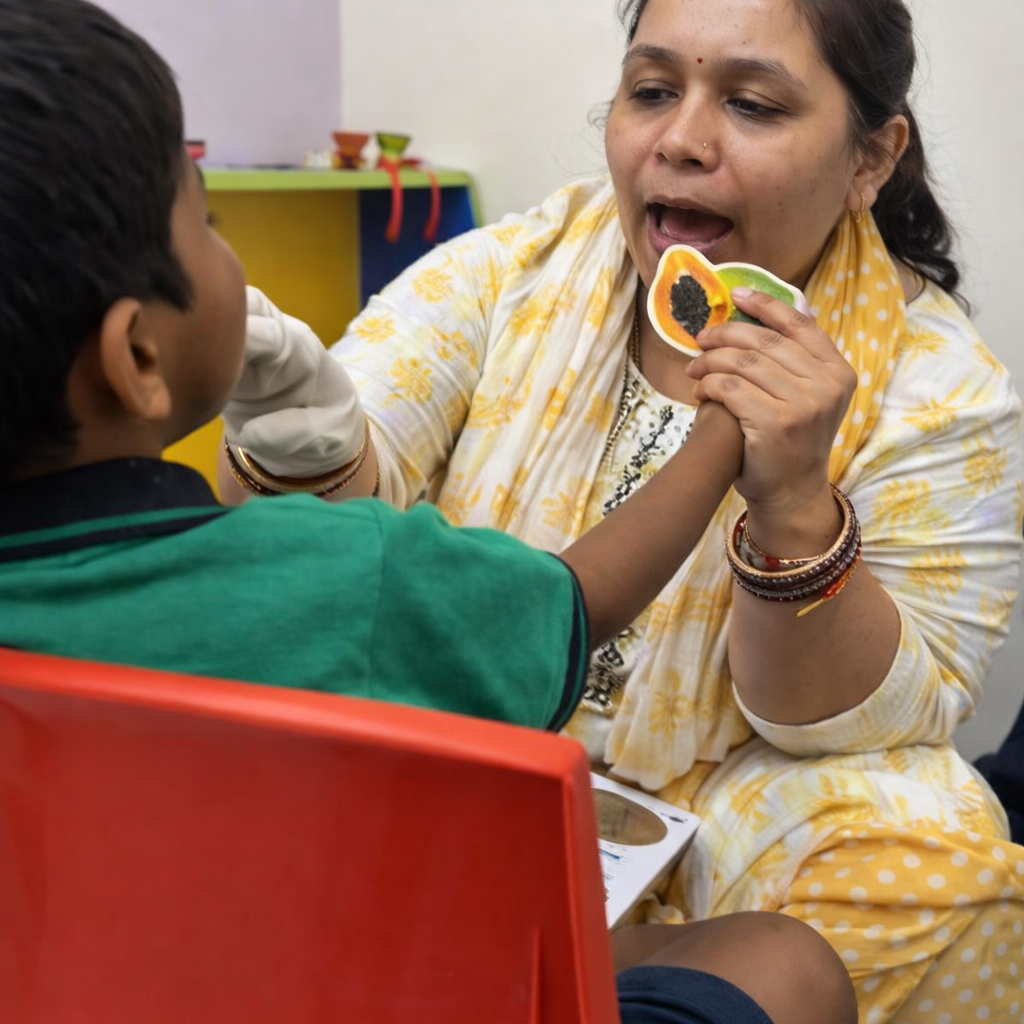
  • Speech Therapy for communication and language development
  • Occupational Therapy for sensory processing and attention regulation
  • Parent guidance for daily communication support
  • Structured play-based interaction sessions

At Listening Ears, therapy programs are designed according to each child’s developmental strengths and challenges to support better everyday participation.
Screen Time and Language Development

Screens often enter caregiving as a solution—to soothe or manage busy schedules. The concern is not intention, but impact.
Language develops through live, responsive interaction—eye contact, pauses, shared emotion, and turn-taking. Screens cannot replace this. Many children may recognise colours or rhymes but struggle to request help, express needs, or engage socially.
Reducing screen exposure is often the first therapeutic step, not a punishment.

What Actually Supports Language at Home

Across disciplines, therapists consistently recommend:

  • Talking with children, not testing them

  • Following the child’s interests

  • Pausing and waiting for responses

  • Using gestures, expressions, and tone

  • Reading together daily

  • Creating screen-free interaction windows

Language grows in relationships, not programs.

When to Seek Support (Don’t Wait for Words)

Waiting is often framed as patience.
In early development, waiting without observation is risk.

Seek professional input if you notice:

  • Limited non-verbal communication

  • Poor joint attention

  • Inconsistent name response

  • Weak understanding of language

  • Frustration replacing communication

  • Little progress over time

Early support is not about labels. It is about preventing secondary struggles.

Why Early Detection Matters

Late identification often leads to:

  • Behavioural challenges

  • Academic stress

  • Social withdrawal

  • Reduced confidence

Early support leads to:

  • Faster progress

  • Better regulation

  • Stronger parent–child interaction

  • Reduced long-term support needs

The brain is most adaptable in the early years. Timing matters.

Integrated Early Intervention

Children do not develop in isolation—and neither should intervention. Speech, regulation, learning, and behaviour are interconnected, and progress accelerates when professionals collaborate.

At Listening Ears – Oishi Care Early Intervention Centre, families are supported through:

  • Early identification

  • Multidisciplinary collaboration

  • Family-centred guidance

  • Individualised intervention strategies

Recognising a delay often brings mixed emotions—relief, fear, and guilt.
The goal is not to “fix” a child, but to understand how they communicate and learn—and build from there.

Bottom Line

Speech and language development starts long before a child speaks their first clear word. Small signs like eye contact, gestures, joint attention, listening response, and social interaction all play an important role in communication growth. Early observation and timely support can help children build stronger developmental foundations during their most important learning years.

At Listening Ears, early intervention programs focus on understanding each child’s unique developmental needs through supportive, play-based, and family-centered approaches that encourage communication, learning, and everyday participation.

Book a Free Consultation

Tell us a bit about your child and we'll connect with you on WhatsApp instantly.

WhatsApp didn't open automatically? Tap here to open it