Reviewed and Written By
Miss Bakul Chaudhary
Miss Bakul Chaudhary is a Licensed Psychologist and Child & Developmental Psychologist, experienced in DIR Floortime, Behaviour Therapy, Parent Counselling, Language Therapy, and AVT. This content is reviewed to ensure accurate, child-focused, and practical guidance for pediatric ADHD therapy.
Disclaimer
This blog is for educational purposes only. It does not replace medical advice, diagnosis, or treatment. Always consult a qualified healthcare professional, psychologist, or therapist for proper ADHD evaluation and therapy planning.
Direct Answer: What Is Pediatric ADHD?
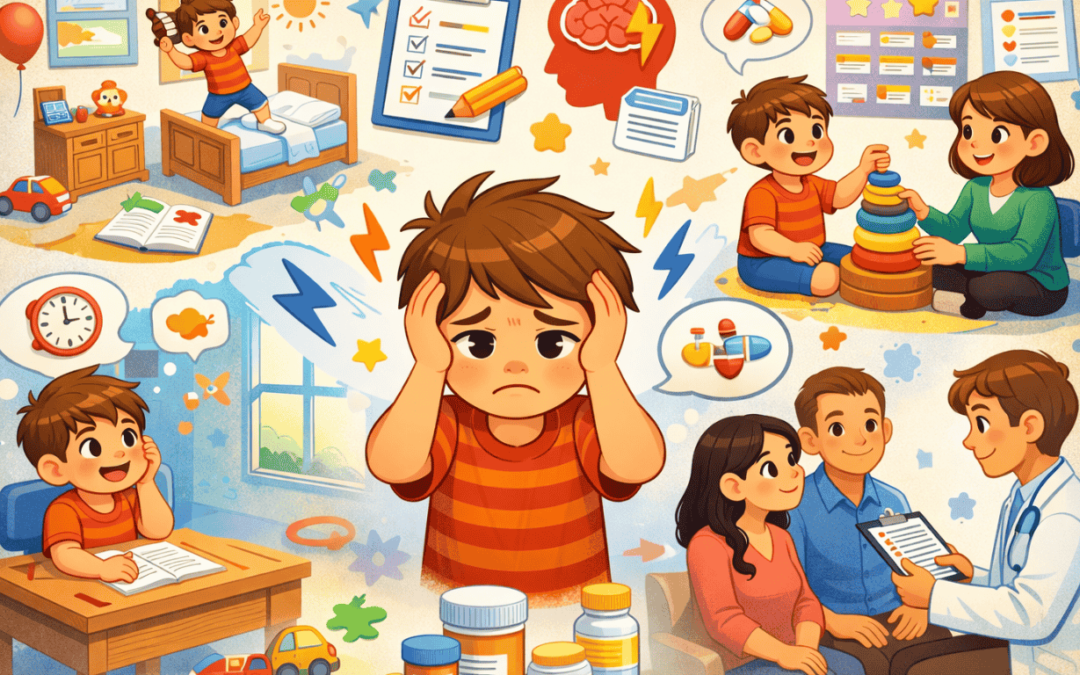
Pediatric Attention Deficit Hyperactivity Disorder (ADHD) is a neurodevelopmental condition seen in children that affects attention, behavior control, and activity levels. Children with ADHD may find it hard to focus, sit still, or control impulses in daily life.
Why Do Children With ADHD Face Learning and Behavior Problems?
ADHD affects how the brain manages attention, self-control, and planning. This makes classroom learning, social interaction, and daily routines challenging.
Common difficulties include:
- Short attention span
- Hyperactive behavior
- Impulsive actions
- Trouble following instructions
- Emotional outbursts
Without proper support, these challenges may continue as the child grows.
Common Signs of ADHD in Children
ADHD symptoms may look different in each child.
Common signs include:
- Constant movement or fidgeting
- Difficulty concentrating on tasks
- Interrupting others frequently
- Forgetting instructions
- Poor organization skills
Early identification helps in better management.
Is ADHD a Medical or Behavioral Condition?
ADHD is both medical and behavioral. It involves brain development differences and behavior regulation issues.
This is why therapy-based support is often more helpful than punishment or pressure. Structured therapies guide children toward better control and understanding.
How Speech Therapy Helps Children With ADHD
Many children with ADHD struggle with communication, listening, and language processing.
Speech therapy helps by:
- Improving listening skills
- Enhancing understanding of instructions
- Developing expressive language
- Supporting classroom communication
Speech therapy plays a key role in improving learning and social interaction.
ADHD Therapy Support for Children in Noida
Children with ADHD may struggle with attention, communication, classroom participation, sensory regulation, and daily activities. Along with behavioural support, therapies like Speech Therapy in Noida and Occupational Therapy in Noida can help children improve focus, listening skills, communication abilities, motor coordination, and overall confidence.
At Listening Ears, therapy sessions are planned according to each child’s individual needs to support better learning, behaviour management, social interaction, and independent growth. Early therapy support can help children perform better both at school and at home.
Role of Behaviour Therapy in ADHD Management
Behaviour therapy is one of the most effective treatments for pediatric ADHD.
It helps children:
- Learn self-control
- Improve focus and task completion
- Manage emotions
- Reduce impulsive behavior
Behaviour therapy also guides parents on positive reinforcement techniques.
Real Statistics About Pediatric ADHD
- According to the CDC, around 5–7% of children worldwide are diagnosed with ADHD
- Boys are diagnosed more often, but girls are frequently underdiagnosed
- Studies show behaviour therapy improves ADHD symptoms by over 60%
- Combined therapy gives better long-term outcomes than medication alone
These numbers show why therapy-based support is essential.
ADHD With Therapy vs Without Therapy: Simple Comparison
| Aspect | With Therapy Support | Without Therapy |
| Attention | Improves gradually | Poor focus |
| Behavior | More controlled | Frequent outbursts |
| Learning | Better school performance | Learning struggles |
| Social Skills | Improved interaction | Social difficulties |
| Confidence | Higher | Low self-esteem |
Fact vs Myth About Pediatric ADHD
Myth: ADHD is caused by poor parenting
Fact: ADHD is a neurodevelopmental condition
Myth: Children will outgrow ADHD automatically
Fact: Early therapy improves long-term outcomes
Myth: Only medication helps ADHD
Fact: Behaviour and speech therapy are highly effective
Why Early Therapy Matters in ADHD
Early intervention helps the child’s brain develop better coping skills. Therapy started at the right age reduces academic and emotional struggles later.
Early support improves:
- Brain regulation
- Emotional control
- Learning ability
- Social confidence
Risks of Ignoring ADHD in Children
Untreated ADHD may lead to:
- Academic failure
- Low self-esteem
- Behavioral problems
- Social isolation
- Emotional stress
Early therapy prevents these long-term risks.
Practical Solutions for Parents
Parents can support children by:
- Starting therapy early
- Maintaining daily routines
- Using positive reinforcement
- Working closely with therapists
- Avoiding negative labeling
Therapy works best when parents and therapists work together.
Why Listening Ears Is a Trusted Choice for ADHD Therapy
Listening Ears focuses on child-centered therapy approaches for ADHD management.
They offer:
- Speech therapy for communication skills
- Behaviour therapy for attention and control
- Structured therapy plans
- Parent guidance and progress tracking
This integrated approach supports overall child development.
Final Thoughts
Pediatric ADHD is manageable with the right guidance and therapy. Speech therapy improves communication, while behaviour therapy builds focus and self-control. With early intervention and professional support, children with ADHD can learn, grow, and thrive confidently. Centers like Listening Ears play a vital role in supporting both children and parents through this journey.
FAQs:
1. At what age can ADHD be diagnosed?
ADHD is usually identified between ages 4 and 7. Symptoms may appear earlier but become noticeable in structured settings like school. Early evaluation helps start timely support.
2. Can speech therapy help children with ADHD?
Yes, speech therapy improves listening, understanding, and communication skills. It helps children follow instructions better. This supports learning and classroom behavior.
3. Is behaviour therapy better than medication?
Behaviour therapy is often recommended as the first approach for young children. It teaches long-term skills and self-control. Medication may be added only if needed.
4. Can ADHD affect a child’s speech and language?
Yes, ADHD can impact attention, listening, and expressive language. This may cause delayed responses or unclear communication. Speech therapy addresses these challenges.
5. Is ADHD a lifelong condition?
ADHD symptoms can reduce with therapy and maturity. Some children continue to face challenges as adults. Early support improves long-term outcomes.
6. How long does behaviour therapy take to show results?
Some improvements are seen within a few months. Consistency and parental involvement speed up progress. Long-term therapy gives stable results.
7. Do children with ADHD have learning disabilities?
Not all children with ADHD have learning disabilities. However, attention issues can affect academic performance. Therapy helps improve learning efficiency.
8. How can parents support ADHD therapy at home?
Parents should follow therapist guidance, maintain routines, and use positive reinforcement. Avoid punishment-based approaches. Home support strengthens therapy success.