
Siblings are super important because they teach us how to get along with others. When you have a brother or sister, you learn about sharing, being fair, helping, and being kind — sometimes the hard way! Think about all the games you played and the secrets you shared with your siblings that you didn’t tell your parents.
How Siblings Learn to Communicate
For siblings to have a good relationship, they need to communicate well. Parents can help, but kids often figure out how to talk and understand each other on their own. For example, a hearing sibling might learn sign language faster than a parent and use it to talk with their brother or sister. Kids also approach communication in a playful way, learning what works best — like making sure to look at their siblings when they speak.
How well a hearing sibling adapts depends a lot on their parents. If parents are positive, helpful, and show high expectations, siblings usually follow their example. Hearing siblings of children who are deaf or hard of hearing often develop great qualities like being more patient, understanding, flexible, caring, and proud of helping their family.
Key Stats and Research Insights
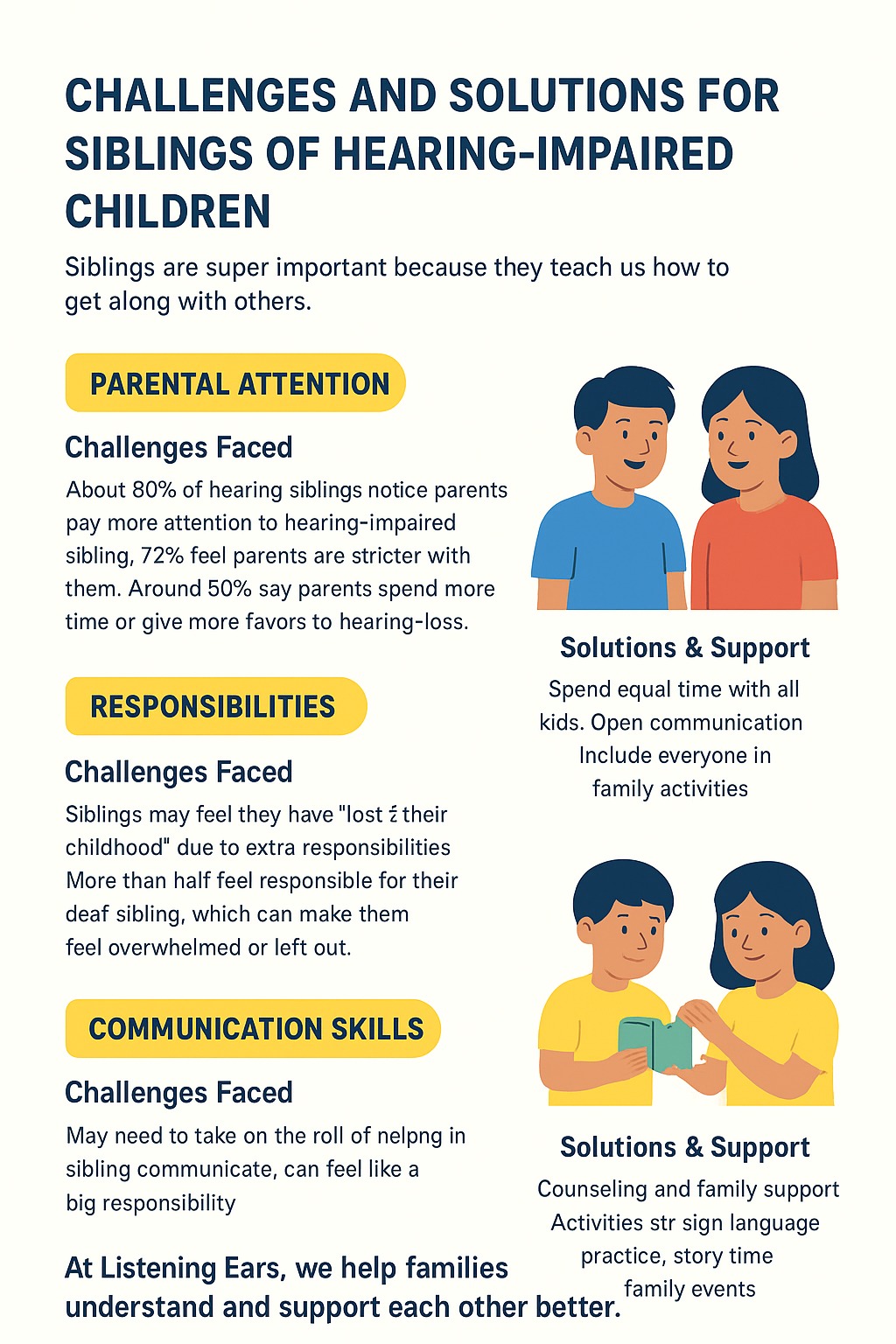
- In India, studies show that kids who can hear sometimes feel their parents pay more attention to their brother or sister with hearing problems. About 80% of them notice this, and 72% think parents are stricter with them than with their sibling who has hearing loss.
- Around half of these kids say parents spend more time or give more favors to the sibling with hearing problems, which can make them feel a little jealous or left out.
- At the same time, hearing siblings often grow up to be very kind, patient, and good at making friends. Having a brother or sister with hearing loss can teach fairness, patience, and empathy.
- Families with a hearing-impaired child usually have less fighting between siblings, and the brothers and sisters feel closer and more caring toward each other.
- Special counseling and family support from centers like cochlear implant clinics or special education centers in Noida can help both kids and parents understand each other better and improve communication at home.
Difficulties and Positive Outcomes for Siblings of Hearing-Impaired Children: A Comprehensive Comparison
| Aspect | Challenges Faced | Positive Outcomes | Solutions & Support |
| Parental Attention | 80% of hearing siblings notice parents pay more attention to hearing-impaired sibling; 72% feel parents are stricter with them; About 50% say parents spend more time or give more favors to sibling with hearing problems | Families with hearing-impaired children usually have less sibling fighting; Brothers and sisters feel closer and more caring toward each other | Parents should spend equal time with all kids; Open communication; Include everyone in family activities; Special counseling from cochlear implant clinics or special education centers |
| Responsibilities | Siblings may feel they have “lost their childhood” due to extra responsibilities; More than half feel responsible for their deaf sibling; Can feel overwhelmed or left out | Hearing siblings develop great qualities like patience, understanding, flexibility, and caring; Feel proud to help their sibling; Over 86% have high emotional maturity | Appropriate counseling and good support help siblings learn to help without feeling pressured; Family guidance programs |
| Communication Skills | May need to take on role of helping sibling communicate; Can feel like a big responsibility | Learn sign language faster than adults through play; Develop excellent communication skills; Figure out playful ways to communicate effectively | Counseling and family support; Activities like sign language practice, story time, and family events help everyone feel included |
| Emotional Impact | May feel jealous or sad; Feel left out when sibling gets special toys or different opportunities; Feelings may not “feel ok” even when they understand rationally | Grow up to be very kind, patient, and good at making friends; Learn fairness, patience, and empathy; Grow more confident and make stronger friendships | Support from parents, teachers, or counselors; Feelings of jealousy usually improve as kids grow older with proper support |
| Overall Development | Risk of feeling pressured to grow up faster | Develop into mature, caring, and happy adults; Parents’ positive attitude and high expectations help siblings follow their example | Joint activities where hearing and hearing-impaired siblings learn, play, and spend time together; Family guidance programs in India |
Challenges Siblings Face When a Brother or Sister Is Deaf or Hard of Hearing
Sometimes, siblings of children who are deaf or hard of hearing may feel like they have to grow up faster. They might feel like they have “lost their childhood” because they take on extra responsibilities, like helping their brother or sister communicate. Studies show that many hearing siblings feel responsible for their deaf brother or sister — in some studies, more than half of siblings felt this way.
Finding Balance and Feeling Understood
While helping a sibling can be important and even teach kids valuable skills, it’s also important that siblings don’t feel overwhelmed or left out. Sometimes hearing siblings might feel jealous or sad because parents or teachers spend more time with their deaf sibling or give them extra attention, special toys, or different opportunities. As children get older, they may understand why their sibling needs extra help, but it might still feel unfair.
With support from parents, teachers, or counselors, siblings can learn how to help without feeling pressured. This support helps both children grow into mature, caring, and happy adults.
As children get older they may rationalize and understand why a hearing impaired sibling might have to be treated differently, but that does not necessarily mean that it will ‘feel’ ok.
Appropriate counseling, good support will help tap the best in this relationship for both and aid in raising mature & caring adults.
Helping and Learning Together
- Hearing siblings often become good at communicating. They can even learn sign language faster than adults because they practice while playing and having fun.
- Many hearing siblings feel proud to help their brother or sister, but sometimes it can feel like a big responsibility. About half of them feel responsible for taking care of their sibling with hearing loss.
- When parents give support and spend equal time with all kids, hearing siblings grow more confident, make stronger friendships, and understand others better. Studies show that over 86% of them have high emotional maturity.
- Feelings of being left out or jealous usually get better as kids grow older, especially when parents talk openly and include everyone in family activities.
- Counseling and family guidance programs in India show that kids do best when hearing and hearing-impaired siblings learn, play, and spend time together. Activities like sign language practice, story time, and family events help everyone feel included.
Final Note:
Having a brother or sister who can’t hear well can sometimes feel tricky — but it also teaches kindness, patience, and love. When families talk, play, and learn together, everyone feels happy and included. Parents, teachers, and counselors can help both children understand each other better and make family time more fun.
At Listening Ears, we believe every child deserves to be heard and understood. We help families learn better ways to communicate so both hearing and hearing-impaired children can grow together with confidence and joy.
FAQ's
What is it like to have a brother or sister who is deaf or hard of hearing?
It can be fun and special, but sometimes it means you have to help more, like learning sign language or helping them communicate.
Why do hearing siblings sometimes feel left out?
Parents or teachers might spend more time with the sibling who has hearing problems, give them extra attention, or special toys. This can make hearing siblings feel a little jealous or forgotten.
Do hearing siblings have to grow up faster?
Sometimes yes, because they take on extra responsibilities. But with help and support, they can learn skills and grow in a positive way.
Can hearing siblings learn sign language?
Yes! Many hearing siblings learn sign language faster than adults because they practice while playing and having fun with their brother or sister.
What good things can happen when you have a sibling with hearing loss?
Hearing siblings often become more patient, caring, flexible, understanding, and proud to help their sibling. They also become better at making friends and solving problems.
What should hearing siblings do if they feel jealous or sad?
It’s okay to feel that way! Talking to parents, teachers, or counselors can help. Over time, most kids feel better as they understand why their sibling needs extra help.
What if I can't hear very well? Can I still be a good listener?
Yes! Many people who can’t hear well use hearing aids, cochlear implants, or sign language. They can still be amazing listeners by paying close attention and using their eyes to watch people’s faces and hands.
How can hearing siblings and deaf siblings have fun together?
Playing games, practicing sign language, doing story time, and joining family activities help siblings learn, communicate, and have fun together.