Medical Disclaimer:
“This blog is for educational purposes only. It does not replace medical advice, diagnosis, or therapy. Always consult a qualified speech therapist or healthcare professional for personalized guidance.”
“This content has been reviewed by Ms. Bakul Chaudhary, a certified speech therapist specializing in autism communication therapy.”
Yes. Speech therapy helps children with autism improve communication, understanding, and daily interaction skills. It supports speech, gestures, eye contact, and even non-verbal communication so children can express their needs clearly and confidently.
Why Do Children With Autism Struggle With Speech?
Many children with autism find it hard to speak, understand words, or use language in social situations. This happens because autism affects how the brain processes sounds, words, and emotions.
Common challenges include:
- Delayed speech development
- Limited vocabulary
- Difficulty forming sentences
- Trouble understanding questions
- Poor eye contact or gestures
Speech therapy works step-by-step to solve these problems.
Different Types of Communication Challenges in Autism
- Some children struggle with speaking words.
- Some understand language but cannot express it.
- Some communicate using gestures, sounds, or behavior.
Speech therapy adapts to how each child communicates, not just how much they speak.
How Speech Therapy Supports Autism Development
Speech therapy focuses on functional communication, not just talking.
It helps children:
- Say words and sentences clearly
- Understand instructions
- Use gestures, signs, or pictures
- Improve social interaction
- Reduce frustration and behavior issues
With the right support, children learn how to communicate in real life, not just in therapy rooms.
What Happens During Speech Therapy for Autism
Therapy sessions may include:
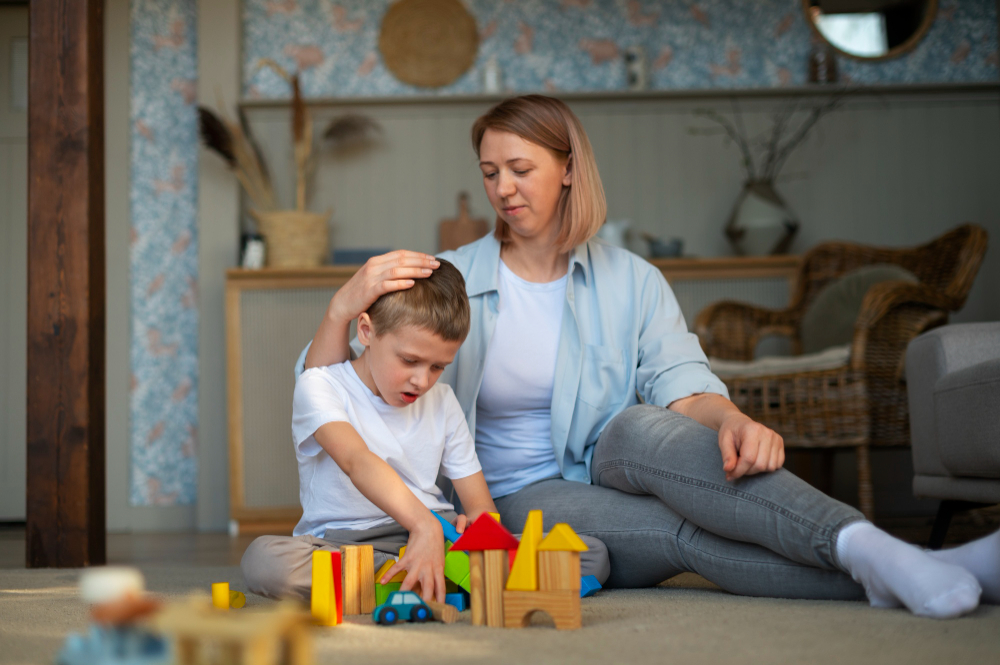
- Play-based interaction
- Sound and word imitation
- Picture or gesture-based communication
- Turn-taking games
- Social communication practice
Therapy is always child-led and pressure-free.
Is Speech Therapy Necessary for Every Child With Autism?
Not every child with autism speaks the same way or at the same speed. Some children may talk late, some may not talk at all, and some may speak but struggle socially.
Speech therapy becomes necessary when:
- A child is not speaking by age 2–3
- Words are unclear or repetitive
- The child cannot express needs
- Social communication is weak
Early therapy gives better long-term results.
Age-Wise Speech Goals in Autism
By 2–3 years:
- Responds to name
- Uses sounds, gestures, or pictures
By 4–5 years:
- Uses words or short phrases
- Understands simple instructions
By 6+ years:
- Improves conversation skills
- Expresses emotions and needs
Goals vary for every child, but early therapy supports steady progress.
Real Statistics About Autism and Speech Therapy
- According to the CDC, 1 in 36 children is diagnosed with Autism Spectrum Disorder
- Around 40% of children with autism are non-verbal or minimally verbal
- Research shows early speech therapy improves communication outcomes by over 60%
- Children who start therapy before age 5 show stronger social and language skills
These numbers clearly show why speech therapy matters.
Speech Therapy in Autism vs No Therapy: A Simple Comparison
| Aspect | With Speech Therapy | Without Speech Therapy |
| Communication | Improves steadily | Very limited growth |
| Behavior | Reduced frustration | Frequent meltdowns |
| Social Skills | Better interaction | Social withdrawal |
| School Readiness | Higher chances | Learning difficulties |
| Confidence | Builds self-expression | Low confidence |
Fact vs Myth About Speech Therapy in Autism
Myth: Children with autism will talk on their own
Fact: Many children need guided therapy to develop speech
Myth: Speech therapy is only about talking
Fact: It also improves understanding, gestures, and social skills
Myth: Therapy works only for young children
Fact: Older children also benefit with the right approach
Therapist Expertise Matters More Than You Think
Speech therapy for autism requires specialized training, patience, and structured methods. A therapist must understand autism behavior patterns, sensory challenges, child psychology, and parent counseling.
Centers like Listening Ears focus on personalized therapy plans instead of one-size-fits-all methods. Their approach supports both the child and the parents throughout the journey.
Why the Right Speech Therapy Center Matters
In cities like Delhi and Noida, therapy quality varies widely.
Centers that offer assessments, parent guidance, and consistent follow-ups deliver better outcomes than places offering only sessions without tracking progress.
Risks of Delaying Speech Therapy
Delaying therapy can lead to permanent communication gaps, increased behavioral problems, social isolation, learning difficulties, and low self-esteem.
Early support prevents these long-term challenges.
When Speech Therapy Alone Is Not Enough
Some children also need:
- Occupational Therapy (sensory & daily skills)
- Behaviour Therapy (emotional regulation)
- Special education support
Combined therapy gives faster and more balanced development.
Practical Solutions for Parents
Parents can support speech therapy by starting therapy as early as possible, practicing exercises at home, using simple words daily, encouraging eye contact, and staying consistent.
Choosing the right center for Speech Therapy in Noida or Speech Therapy in Delhi also plays a major role in progress.
Evidence-Based Therapy Approach
Effective speech therapy for autism follows evidence-based methods that are structured, measurable, and child-friendly, rather than random exercises.
Final Thoughts
Speech therapy is not about forcing a child to speak. It is about helping them communicate in their own way. With proper guidance, patience, and expert support, children with autism can learn to express themselves better and live a more confident life.
Therapy centers like Listening Ears help children unlock their communication potential step by step.
FAQs: Speech Therapy in Autism
1. At what age should speech therapy start for autism?
Speech therapy can start as early as 18 months. Early therapy helps the brain develop communication pathways faster. Starting early often leads to better long-term results.
2. Can non-verbal children benefit from speech therapy?
Yes. Speech therapy helps non-verbal children use gestures, pictures, signs, or assistive tools. Communication is possible even without spoken words.
3. How long does speech therapy take to show results?
Every child is different. Some children improve in a few months, while others take longer. Consistency and home practice speed up progress.
4. Is speech therapy painful or stressful?
No. Therapy is play-based and child-friendly. Therapists use games, toys, and activities to make learning enjoyable and stress-free.
5. Can speech therapy reduce behavioral issues?
Yes. When children learn to express needs, frustration reduces. This often leads to fewer meltdowns and better emotional control.
6. Do parents need to attend speech therapy sessions?
Parent involvement is very helpful. Parents learn techniques to practice at home, which improves therapy results.
7. Is speech therapy only for speaking clearly?
No. It also improves understanding, listening, social interaction, and daily communication skills.
8. How do I choose the right speech therapy center?
Look for experienced therapists, personalized plans, child-friendly environments, and parent guidance. Centers like Listening Ears focus on all these areas.