
What is Hearing?
Hearing is when sound waves enter your ears. It’s like catching a ball – your ears catch the sounds around you.
- Hearing just happens on its own
- You don’t have to try to hear – it’s automatic
- It’s one of your five senses (along with seeing, touching, tasting, and smelling)
- You hear all sorts of sounds all day long, even when you’re not paying attention
- Hearing happens in your ears only
According to the World Health Organization (WHO), more than 63 million people in India have some kind of hearing problem — and many of them don’t even realize it until later!
What is Listening?
Listening is when you pay attention to what you hear and try to understand it. It’s like not just catching the ball, but figuring out what game you’re playing!
- Listening takes effort and concentration
- You choose to listen – it doesn’t just happen on its own
- Your brain works hard to understand the meaning of the sounds
- Listening uses your ears PLUS your brain and sometimes other senses too
- You might watch someone’s face or gestures to help you listen better
👉 If your child struggles to understand instructions or communicate clearly, working with a Speech Therapist in Noida can help improve listening and communication skills.
👉 Children who find it difficult to focus or follow directions may benefit from Occupational Therapy for sensory and attention development.
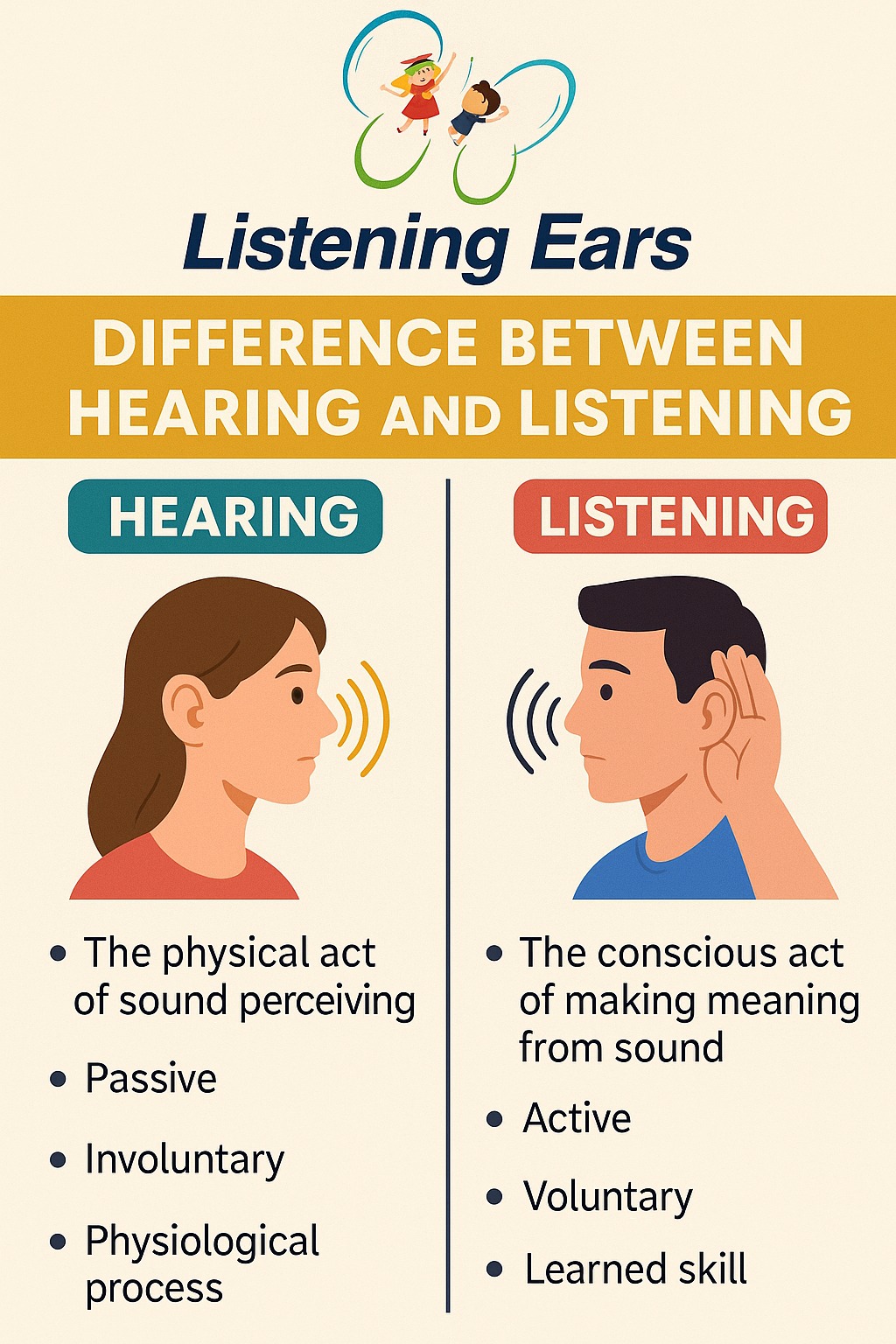
Big Differences Between Hearing and Listening
Hearing | Listening |
|---|---|
| Happens without trying | Takes concentration |
| Just physical (ears only) | Mental and physical (ears + brain) |
| Happens automatically | Is a choice you make |
| Doesn’t require thinking | Requires thinking and understanding |
| You can hear without listening | You can’t listen without hearing first |
Interesting Facts
Here are five simple points about hearing loss and listening skills in India:
In India, around 63 million people have big problems hearing sounds clearly, and many of them are kids
In villages, about 1 out of every 3 people may have some hearing trouble, which means they might miss out on important things said in school or at home.
Most serious hearing problems in children are caused by ear infections, but these can be fixed or avoided if spotted early and treated by a doctor.
If older people in a family (over 40 years old) can’t hear well, it’s very common—about 2 out of 3 have some trouble.
If your child can hear sounds but struggles to understand instructions or communicate clearly, professional support can help. Working with a Speech Therapist can improve listening, speaking, and communication skills in children.
Families in the capital region can also explore Speech Therapy in Delhi programs that help children strengthen listening ability, language development, and school communication.
Understanding the difference between hearing and listening is very important for children’s school performance, especially for kids with hearing difficulties. Parents can also learn how cochlear implants help children develop better listening skills over time.
How Listening Problems Affect Children
Many parents think their child has a hearing problem, but in many cases the real issue is listening and processing sounds.
Children with listening difficulties may:
- Ignore instructions
- Struggle in school
- Have delayed speech
- Find it hard to focus
- Misunderstand conversations
If you notice these signs, a professional assessment can help identify whether your child needs speech therapy, occupational therapy, or auditory support.
👉 You can explore our Speech Therapy services in Noida to support your child’s communication development.
When Should Parents Seek Help?
If your child:
- Does not respond when called
- Misunderstands instructions
- Struggles to focus on conversations
- Has delayed speech
It may be helpful to consult a child communication specialist.
At Listening Ears, we support children with listening, speech, and communication challenges through personalized therapy programs.
Hearing vs. Listening Comparison
| Aspect | Hearing | Listening |
| Definition | Sound waves entering your ears | Paying attention to what you hear and trying to understand it |
| Effort Required | Happens without trying | Takes concentration and effort |
| Process Type | Just physical (ears only) | Mental and physical (ears + brain) |
| Control | Happens automatically | Is a choice you make |
| Cognitive Load | Doesn’t require thinking | Requires thinking and understanding |
| Relationship | You can hear without listening | You can’t listen without hearing first |
| Function | Passive reception of sound | Active understanding of meaning |
| Body Parts Involved | Ears only | Ears + brain + sometimes other senses |
| Nature | One of your five senses | A skill that requires practice |
| Purpose | Detecting sound waves | Learning, understanding, building connections |
Why Listening Matters
Listening helps you:
- Learn new things
- Understand what people are telling you
- Build better friendships
- Know what’s happening around you
- Follow directions correctly
Children with poor listening skills may appear distracted, slow to respond, or struggle to follow instructions in school and daily activities. In such cases, support from an Occupational Therapist can help improve attention, sensory processing, and everyday functional skills that naturally strengthen listening ability.
Families in the capital region can also explore Occupational Therapy in Delhi programs designed to support focus, communication, and learning development in children.
Take Care of Your Ears!
How Parents Can Support Children With Hearing Impairment
Remember: You need good hearing to be able to listen well. Take care of your ears by:
- Not listening to music too loud
- Wearing ear protection in noisy places
- Telling a grown-up if sounds seem too quiet or muffled
- Put away distractions like phones or toys
For more guidance, you can learn how parents can support children with hearing impairment to strengthen their listening and communication skills.
When you listen well (not just hear), you can learn more and make better connections with other people!
Speech Therapists Can Help
Sometimes kids need a little extra support with hearing and listening. If listening feels difficult or speech isn’t clear, a speech therapist can make a big difference. In Noida, meeting a speech therapist in Noida can help children build better listening and speaking skills in a fun and supportive way.
Families can also connect with Listening Ears to explore therapy options and early support programs designed for children with speech or hearing challenges.
Event at Listening Ears:
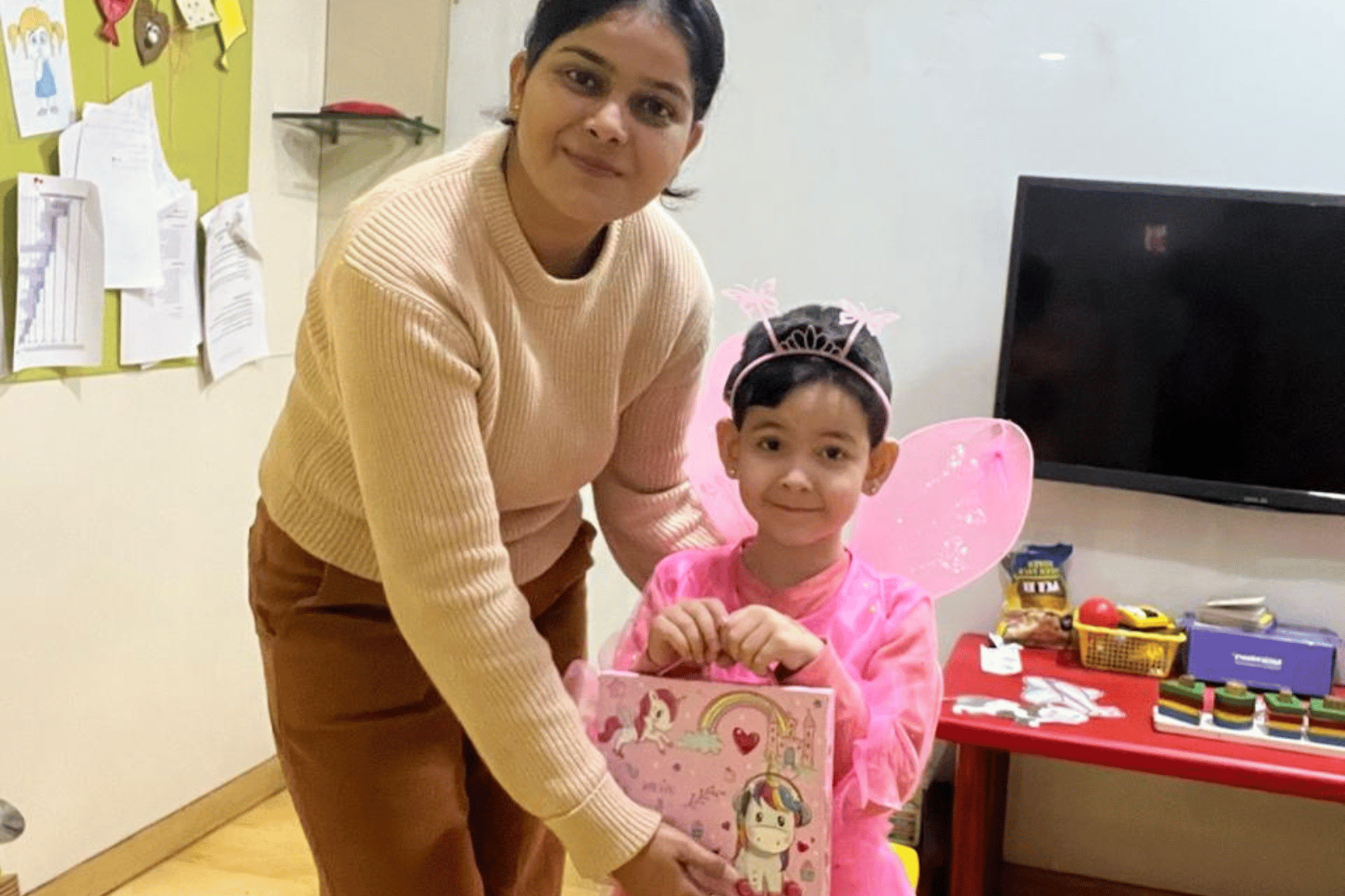
Recently, Listening Ears – Oishi Care organized an interactive workshop led by Dr. Nayela Ahmad and Ms. Bakul Chaudhary. The session focused on helping parents understand the emotional and communication challenges children face in daily life. It created a warm, open space where families could share experiences and learn practical strategies to support their child’s listening and speech development at home.
What Our Expert Say:
Ms. Bakul Chaudhary, Child Psychologist and Founder of Listening Ears, Says, “We strive for holistic growth and development of children — understanding their unique needs and helping them lead independent lives through early identification and intervention.” Her approach continues to inspire many families toward meaningful progress and confident communication.
Connect With Us
FAQ's
Can I hear even when I'm sleeping?
Yes! Your ears keep working even when you sleep. That’s why loud noises can wake you up. But you’re not really listening when you sleep because your brain isn’t paying attention.
Why do I sometimes hear my teacher but don't know what she said?
Because you were hearing but not listening! Your ears caught the sound, but your brain wasn’t focused on understanding the words. This happens when you’re thinking about something else.
Can animals hear better than humans?
Yes! Dogs can hear sounds that are too quiet or too high-pitched for us. Bats and dolphins can hear even better than dogs. But humans are better at listening and understanding language!
Why do my parents say "Listen to me!" when I already heard them?
They want you to not just hear their words, but really pay attention and understand what they’re saying. They want you to focus your brain, not just your ears!
Is it bad to listen to loud music with headphones?
Yes, it can hurt your hearing over time. If music is too loud for too long, it can damage the tiny parts inside your ears that help you hear. Keep the volume at a safe level!
Can I get better at listening?
Absolutely! Listening is a skill you can practice. Try looking at the person talking, putting away toys or phones, and thinking about what they’re saying. The more you practice, the better you get!
What if I can't hear very well? Can I still be a good listener?
Yes! Many people who can’t hear well use hearing aids, cochlear implants, or sign language. They can still be amazing listeners by paying close attention and using their eyes to watch people’s faces and hands.
Why is listening important in school?
Listening helps you learn new things, follow your teacher’s instructions, understand your friends, and do well on tests. Good listeners usually do better in school because they understand more!