
Hearing aids help people hear better, but they do not fully restore hearing. Around 466 million people worldwide experience hearing loss, and using hearing aids improves speech understanding, communication, and daily life. Experts in audiology confirm that properly fitted hearing aids boost learning, social interaction, and overall quality of life. Knowing the facts versus myths ensures children and adults get the right support early for the best results.
How Hearing Aids Help Children and Adults
Hearing aids help people hear better, even though they do not completely restore hearing. Research shows that using hearing aids improves a person’s ability to follow conversations, understand speech, and communicate effectively. Studies also show that children and adults with hearing aids perform better in school, work, and social situations compared to those without support.
What You Need to Know About Hearing Aids
Hearing aids help people hear better, understand speech, and enjoy life. They are especially important for children, as early intervention supports speech, language, and learning skills. Expert audiologists confirm that children with hearing aids develop faster in school and socially compared to those without support.
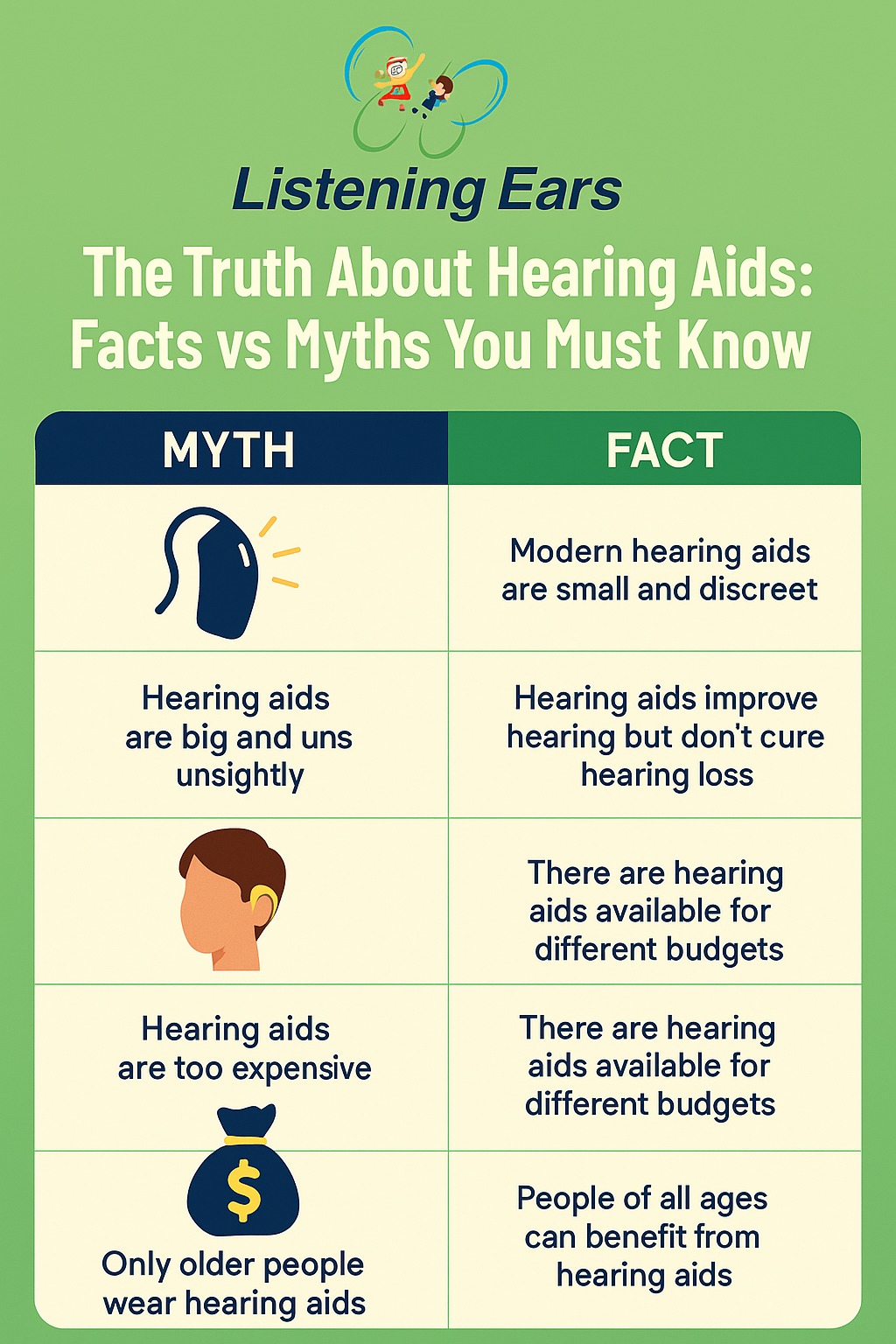
Myth 1: Hearing aids restore hearing completely
Fact:
Hearing aids cannot cure hearing loss or make your hearing perfect like glasses make vision 20/20. But they do improve hearing and communication, helping people follow conversations and enjoy everyday sounds. Clinical studies show that children and adults with hearing aids score higher in speech understanding and academic performance compared to those without aids.
Myth 2: Buying hearing aids online saves time and money
Fact:
Buying online does not replace professional care. Audiologists provide:
- Hearing evaluation
- Referral for medical treatment if needed
- Proper fitting and programming of hearing aids
- Instruction on use and maintenance
- Follow-up care, repair, and support
- Rehabilitation services
Expert audiologists stress that professional guidance ensures the hearing aid actually matches your hearing loss and listening needs.
Myth 3: Hearing aids will damage your hearing
Fact:
Properly fitted hearing aids are completely safe. They do not harm your ears. Studies confirm that well-maintained hearing aids preserve existing hearing while improving listening.
Myth 4: Mild hearing loss doesn’t need a hearing aid
Fact:
Every child’s or adult’s hearing is different. Even mild hearing loss can cause learning or communication problems. Audiologists can evaluate your needs and show how a hearing aid can make a difference.
Myth 5: Wearing two hearing aids is unnecessary
Fact:
Most people hear with two ears. Two hearing aids (binaural) improve the ability to locate sounds, understand speech in noisy places, and experience natural sound quality. Experts recommend using two aids if both ears have hearing loss.
Myth 6: Invisible hearing aids are always the best
Fact:
There are many styles of hearing aids. The best one depends on your hearing loss and listening needs, not on what friends use. Audiologists help choose the correct style and ensure it works properly.
Hearing Aids: Myths vs Facts – Comparison Table
| Myth | Fact | Why It Matters |
| Hearing aids restore hearing completely | Hearing aids improve hearing and communication but cannot cure hearing loss or make it perfect like glasses do for vision | Clinical studies show users score higher in speech understanding and academic performance |
| Buying hearing aids online saves time and money | Online purchase cannot replace professional audiological care (evaluation, fitting, programming, maintenance, follow-up) | Professional guidance ensures the device matches specific hearing loss and listening needs |
| Hearing aids will damage your hearing | Properly fitted hearing aids are completely safe and do not harm ears | Well-maintained hearing aids preserve existing hearing while improving listening ability |
| Mild hearing loss doesn’t need a hearing aid | Even mild hearing loss can cause learning or communication problems | Every person’s hearing needs are different; audiologists can evaluate individual requirements |
| Wearing two hearing aids is unnecessary | Two hearing aids (binaural) are recommended if both ears have hearing loss | Improves sound location, speech understanding in noisy places, and natural sound quality |
| Invisible hearing aids are always the best | The best hearing aid depends on individual hearing loss and listening needs, not appearance or popularity | Audiologists help choose the correct style based on medical evaluation, not cosmetic preference |
What Professional Audiological Care Includes
| Service Component | Description |
| Hearing Evaluation | Complete assessment of hearing levels and type of loss |
| Medical Referral | Referral for medical treatment if underlying conditions are detected |
| Proper Fitting & Programming | Custom adjustment of hearing aids to match individual hearing profile |
| User Instruction | Training on how to use and maintain hearing aids properly |
| Follow-up Care | Ongoing support, adjustments, repairs, and maintenance |
| Rehabilitation Services | Additional therapy and support for optimal hearing outcomes |
Benefits of Hearing Aids (With Proper Use & Support)
| Benefit Category | Specific Improvements |
| Communication | Better speech understanding, clearer conversations, reduced need for repetition |
| Academic/Work Performance | Higher scores in school and work tasks, better learning outcomes |
| Social Life | Easier socializing, reduced isolation, improved participation in activities |
| Emotional Well-being | Reduced frustration, boosted confidence, better quality of life |
| Child Development | Faster speech, language, and learning skill development compared to children without aids |
| Daily Activities | Ability to fully participate in everyday activities and enjoy sounds |
Key Global Statistics
| Statistic | Details |
| People worldwide with hearing loss | Approximately 466 million people |
| Impact of early intervention for children | Children with hearing aids develop speech, language, and learning skills faster than those without support |
Why Early Care Matters
Hearing aids are especially important for children. Research shows that children with hearing aids develop speech, language, and learning skills faster than children without them. Early identification and support from audiologists and parents can make a big difference in school and social life.
If you notice hearing difficulties in your child or yourself, visit Listening Ears. They offer professional evaluations, expert care, and modern hearing solutions to improve hearing and quality of life.
Recent Community Event: Oishi Care Collaboration
Listening Ears recently partnered with Oishi Care for a community awareness drive on early hearing screening for children. The event featured free hearing check-ups, parent counseling, and awareness sessions on how timely hearing support can change a child’s developmental journey. Parents appreciated the hands-on guidance from audiologists about how to spot early hearing loss signs and when to consider professional evaluation.
Clinical Excellence in Pediatric Audiology
At Listening Ears, the audiology team specializes in child hearing assessment and fitting pediatric hearing aids using advanced diagnostic tools. The experts focus on customizing every hearing aid based on a child’s listening environment—home, school, and outdoors—ensuring the best hearing clarity and comfort. This approach has helped many children regain speech confidence and active classroom participation.
Final Thoughts:
Hearing aids help people hear better, communicate clearly, and perform better in school, work, and everyday life. They make learning, socializing, and understanding conversations easier, reduce frustration and isolation, and boost confidence. With consistent use and proper support, children and adults with hearing loss can fully participate in activities, develop important skills, and enjoy a higher quality of life.
FAQs About Hearing Aids
What is a hearing aid?
A hearing aid is a device that makes sounds louder so people with hearing loss can hear better.
Can hearing aids cure hearing loss?
No. They cannot fix hearing, but they help you listen, speak, and communicate better.
Do hearing aids damage ears?
No. Properly fitted hearing aids are safe and do not harm hearing.
Should I wear one or two hearing aids?
If both ears have hearing loss, two hearing aids are usually better for understanding sounds and conversations.
Are invisible hearing aids always the best?
Not always. The best hearing aid depends on your hearing needs, not appearance.
Can mild hearing loss use hearing aids?
Yes. Even mild hearing loss can affect learning and communication. Audiologists can advise if a hearing aid is helpful.
Why see an audiologist instead of buying online?
Audiologists ensure the hearing aid fits correctly, is programmed properly, and comes with support and follow-up care.
When should children get a hearing test?
Early testing is best. The sooner a child is diagnosed, the faster they can learn speech, language, and school skills.