
Written by Kuberdita R., Psychology Intern
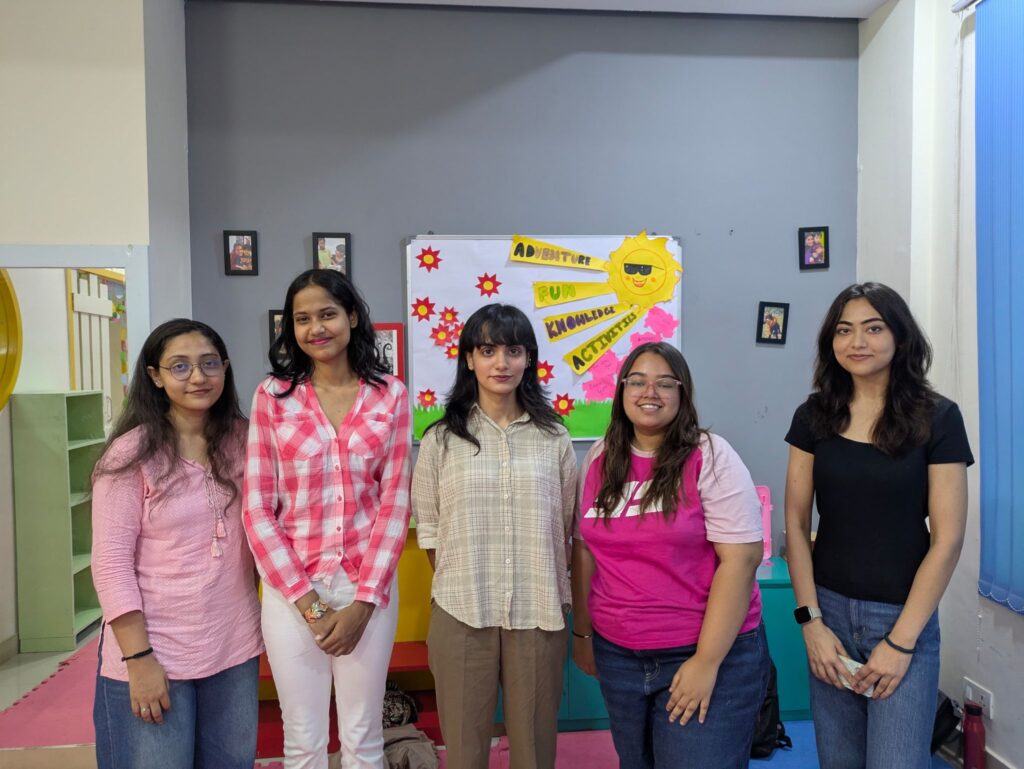
For two months, I sat quietly at the back of therapy rooms, notebook in hand, watching something most parents never get to see up close: what actually happens inside a child development session.
I completed my internship at Listening Ears in Jasola, South East Delhi — a center with two decades of experience working with children who have developmental, sensory, and behavioral needs. I came in as a psychology student hoping to understand the clinical side of child development. I left with something bigger — a real appreciation for how much intention sits behind what looks, from the outside, like simple play.
It Looks Like Play. It Isn’t.
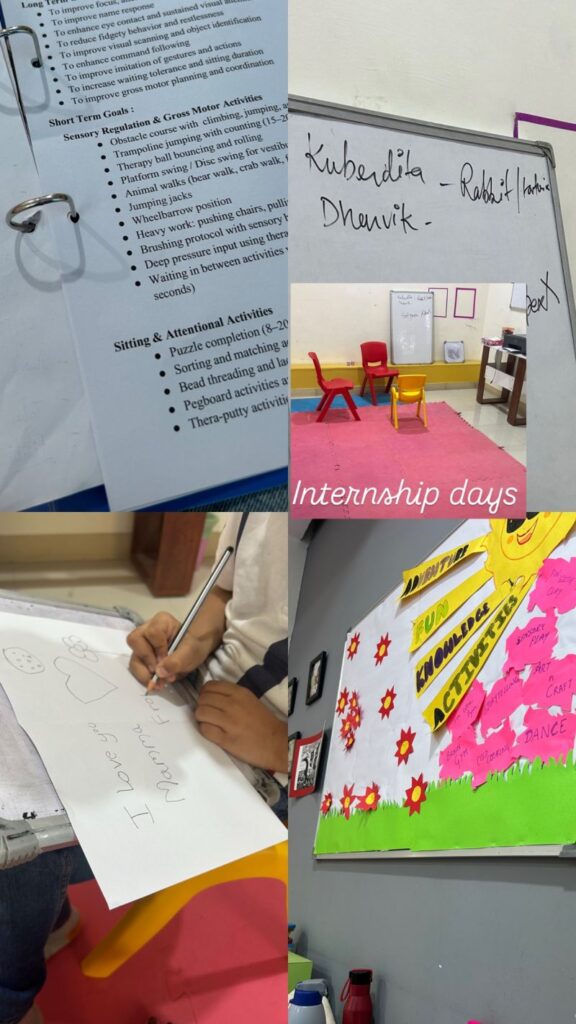
The first thing that surprised me was how unclinical an occupational therapy (OT) session looks. A child balancing on a therapy swing, stacking blocks, or navigating an obstacle course doesn’t look like “treatment” — it looks like recess.
But every activity I observed was built around a specific goal: improving fine motor coordination, regulating sensory input, or building the muscle control needed for something as ordinary as holding a pencil or buttoning a shirt. The therapists I shadowed at Listening Ears weren’t just keeping children occupied. They were reading each child’s response in real time — adjusting pressure, pace, and challenge level session to session — to move that child toward specific functional and developmental milestones.
That’s the part outsiders don’t see: the goal-setting, the data tracking, the constant recalibration behind every “playful” exercise.
Why the Team Approach Matters More Than I
Realized
Before this internship, I thought of child development support as something one specialist handles. What I actually saw was a room full of different disciplines — occupational therapists, psychologists, and sometimes speech professionals — working from the same understanding of a child, each contributing a different lens.
A child’s progress in an OT session would inform how a psychologist approached behavioral goals that same week. Parents weren’t kept at arm’s length either — they were briefed regularly and given specific things to reinforce at home. That loop between therapist, psychologist, and family is, I now understand, what actually accelerates a child’s progress. No single specialist working alone gets the same results.
What This Internship Actually Gave Me
Beyond the clinical exposure, this experience sharpened three things I didn’t expect:
- Observation as a skill, not a passive act. Watching a session properly — noticing what a child avoids, what calms them, what frustrates them — takes real training.
- Patience as a clinical tool. The best sessions I watched were unhurried. Therapists let a child struggle just long enough to build resilience, without letting frustration take over.
- Empathy backed by evidence. Every warm, encouraging interaction I saw was paired with a therapist quietly tracking whether it was working.
I’m grateful to the therapists and psychologists at Listening Ears who let me sit in on their sessions and answered every question I had — even the naive ones. Watching a 20-year-old center run this many moving parts in sync taught me more about child development in eight weeks than a semester of lectures could.
A Note for Parents Reading This
If you’re a parent wondering what actually happens in an OT session, or whether a play-based approach can produce real, measurable progress — I saw it happen, week after week. It’s not just play. It’s structured, individualized, and quietly rigorous work, built by people who’ve been doing this for two decades.
— Kuberdita R. is a psychology student who completed her internship at Listening Ears, Jasola. Connect with her on LinkedIn.