Babies Can Hear Before They Are Born!
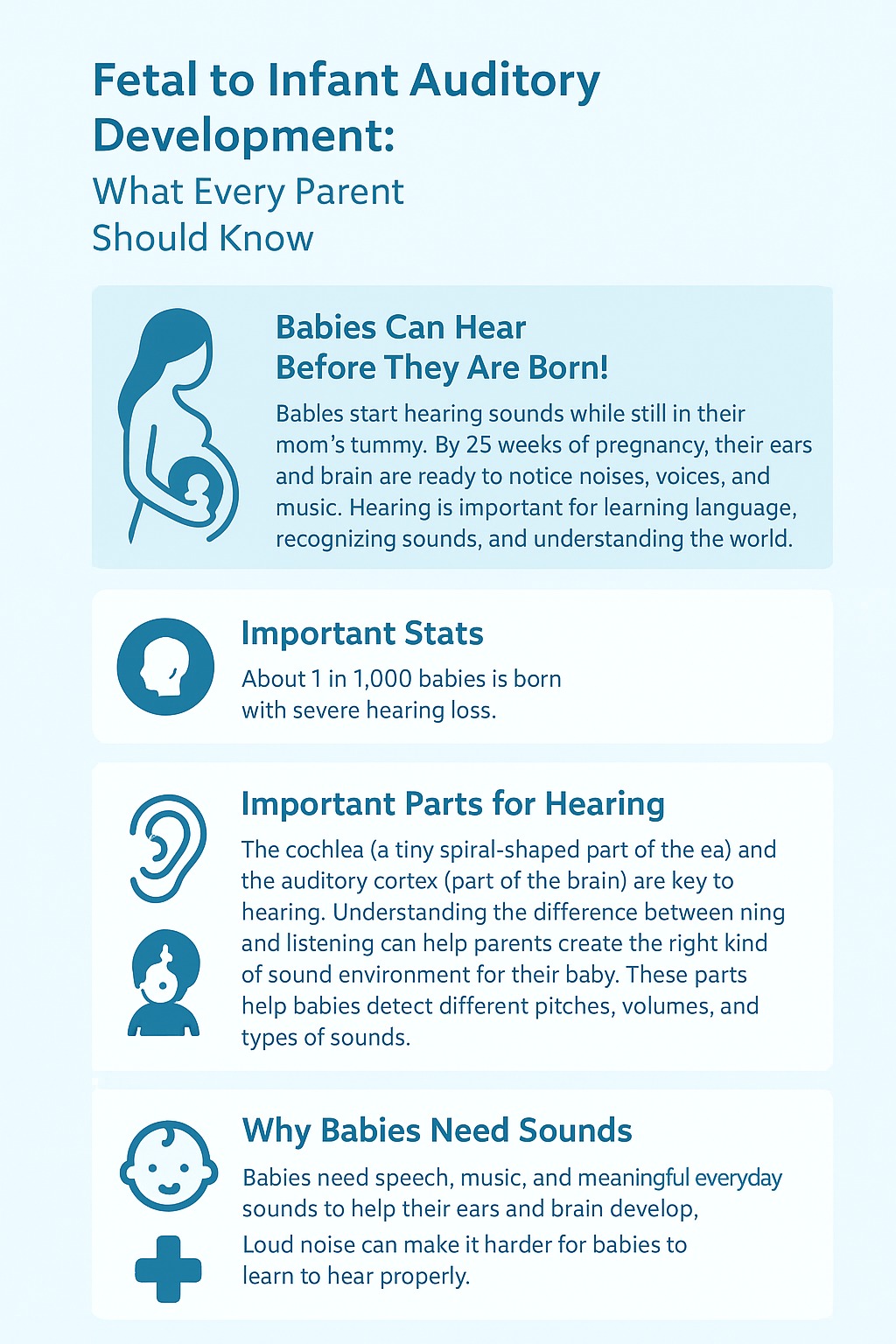
Babies start hearing sounds while still in their mom’s tummy. By 25 weeks of pregnancy, their ears and brain are ready to notice noises, voices, and music. Hearing is important for learning language, recognizing sounds, and understanding the world.
Important Stats
- About 1 in 1,000 babies is born with severe hearing loss.
- Babies cannot hear well if background noise is louder than 60 decibels (like a normal conversation).
- The first 5–6 months after birth are very important for the brain and ears to develop proper hearing.
Important Parts for Hearing
The cochlea (a tiny spiral-shaped part of the ear) and the auditory cortex (part of the brain) are key to hearing. Understanding the difference between hearing and listening can help parents create the right kind of sound environment for their baby. These parts help babies detect different pitches, volumes, and types of sounds. Scientists say the period from 25 weeks of pregnancy to 5–6 months after birth is critical for these parts to grow and learn.
Why Babies Need Sounds
Babies need speech, music, and meaningful everyday sounds to help their ears and brain develop. Loud noise can make it harder for babies to learn to hear properly. For example, preterm babies in the NICU are very sensitive to background noise, and too much can harm their hearing development.
How Parents and Hospitals Can Help
- Talk and sing to babies, even before birth
- Play gentle music
- Keep the environment quiet, especially in the NICU
- Protect sleep and REM sleep, which helps the brain grow
When parents and doctors do these things, babies’ hearing develops better, helping them recognize words, music, and sounds as they grow.
Fetal to Infant Auditory Development: Key Stages and Parental Guidelines
Here’s a comparison table based on the content about fetal to infant auditory development:
| Developmental Stage | Timeline | Key Developments | Hearing Capabilities | Recommendations |
| Fetal Stage (In the Womb) | 25 weeks of pregnancy onwards | Ears and brain become ready to notice noises, voices, and music; Cochlea and auditory cortex begin developing | Can hear sounds while in mother’s tummy; Begin recognizing voices and music | Talk and sing to baby; Play gentle music; Provide meaningful sound exposure |
| Critical Development Period | 25 weeks of pregnancy to 5-6 months after birth | Cochlea (spiral-shaped ear part) and auditory cortex (brain part) grow and learn; Most crucial period for proper hearing development | Learning to detect different pitches, volumes, and types of sounds | Ensure rich sound environment with speech and music; Protect from excessive loud noise |
| Early Infancy (0-6 months after birth) | Birth to 5-6 months | Brain and ears continue developing proper hearing; REM sleep supports brain growth | Cannot hear well if background noise exceeds 60 decibels (normal conversation level); Developing ability to recognize words, music, and sounds | Keep environment quiet; Talk and sing regularly; Play gentle music; Protect sleep and REM sleep |
| Special Considerations (Preterm Babies in NICU) | Varies based on birth timing | More sensitive critical development period; Brain and ear development occurs in artificial environment | Extremely sensitive to background noise; Excessive noise can harm hearing development | Maintain especially quiet NICU environment; Minimize background noise; Protect sleep; Provide gentle, meaningful sounds only |
| Hearing Loss Risk Factors | Any stage | Approximately 1 in 1,000 babies born with severe hearing loss | Varies – some babies have limited or no hearing ability | Early screening and detection; Prompt intervention; Specialized support from audiologists and doctors |
Fun Tip for Parents:
Even before birth, babies can recognize their mother’s voice! Singing the same lullaby every day can help your baby feel calm and familiar with your voice after birth. Parents can also learn more about how to support children with hearing impairment to build a strong connection and language foundation early on.
When parents and doctors do these things, babies’ hearing develops better. They can recognize words, voices, music, and everyday sounds, giving them a strong start for learning and social skills.
Recent Program at Listening Ears
Listening Ears recently held an Early Hearing Awareness Camp for expecting and new parents. The session focused on how sound exposure during pregnancy and the first few months of life supports brain and language development. Parents learned simple ways to create a calm, sound-friendly environment at home — from talking gently to minimizing background noise.
Our Expertise in Infant Hearing Care
Our Pediatric Audiology Team specializes in early hearing screening and auditory development programs for infants. Using advanced diagnostic tools and playful sound-based interaction, they help parents understand how to nurture healthy hearing and early language milestones right from birth.
We’re Here to Help!
Taking care of your baby’s hearing is super important! Just like you want your baby to see beautiful things and taste yummy food, you also want them to hear every song, every laugh, and every “I love you” clearly.
At Listening Ears , we help make sure your little one’s ears are healthy and strong. Think of us as your friendly hearing helpers!
Remember: Every sound your baby hears helps them learn and grow. Let’s make sure they hear the world perfectly!
FAQ's
Can babies hear before they are born?
Yes! Babies start hearing sounds in the womb around 25 weeks of pregnancy. They can notice voices, music, and other meaningful sounds.
Which parts of the ear help babies hear?
The cochlea (tiny spiral in the ear) and the auditory cortex (part of the brain) are most important. They help babies detect different pitches, volumes, and types of sounds.
Why do babies need sounds to hear properly?
Hearing is not automatic like seeing. Babies need speech, music, and everyday sounds to help their ears and brain develop. Without these, their hearing skills might grow slower.
Can loud noise harm babies’ hearing?
Yes! Babies cannot hear well if the noise around them is louder than 60 decibels (like a normal conversation). Too much loud noise, especially in the NICU, can make it harder for babies to learn sounds.
What is the most important time for babies’ hearing development?
The critical period is from 25 weeks of pregnancy to 5–6 months after birth. During this time, the ears and brain learn to detect different sounds and develop proper hearing.
How can parents help babies hear better?
Parents can help babies hear better by talking and singing to them, playing gentle music, keeping the environment quiet, and making sure they get good sleep.
Do preterm babies need special care for hearing?
Yes! Preterm babies in the NICU are more sensitive to noise. They need a quiet environment, gentle sounds, and good sleep to develop their hearing properly.
Can babies recognize their parents’ voices?
Yes! Even before birth, babies can recognize their mother’s voice. Singing the same lullaby every day can make the baby feel calm and familiar with the voice after birth.