
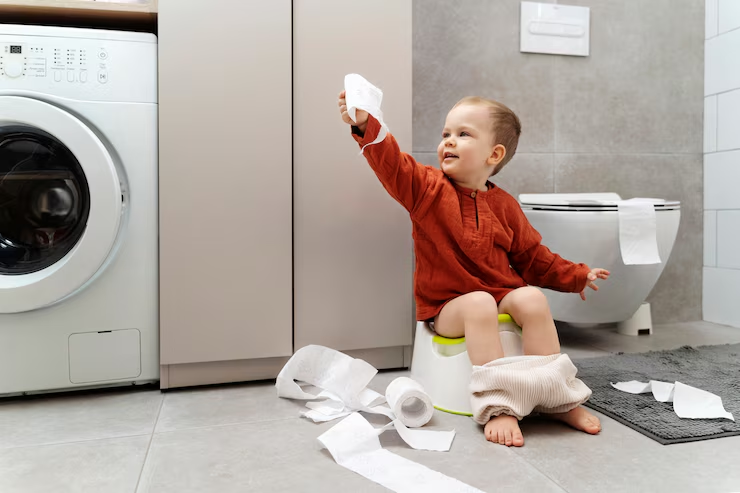
Some kids with autism take longer to learn how to use the toilet because their brains work in special ways. They might find it tricky to understand body signals or changes in routine. That’s why they often learn a bit later than other kids. Behavioral therapy can often make this process easier by teaching small, step-by-step habits that fit their learning style.
In fact, research shows that many children with Autism Spectrum Disorder (ASD) start using the toilet later than their friends. One study found that children with ASD often learn to pee or poop in the toilet months or even years after other kids do (Tsai, Stewart, & August, 1981). This is completely normal for them and just means they may need more time, patience, and gentle practice.
Here are a few tips to remember when teaching toilet skills
- Physical: A pediatrician can inform you about physical or medical causes that could lead to toileting issues.
- Language: As communication and comprehension is an issue with these children, they might not be able to convey they have to go.
- Sensory issues: tactile defensiveness and other such sensory issues might pose a problem
- Dressing: Sensory issues and the technicality of donning and doffing clothes before and after toilet time might pose as a problem
- Fears: Sitting on high toilet seats, the sounds of the flush or the faucet might be scary to the child. Getting children used to the toilet is very important.
- Body Cues: Some children might not even register the wetness and may not be aware of the state of their clothes
- Need for sameness: Since a change in routine is difficult for a child to adjust to, changing toileting habits might prove to be a challenge
- Using different toilets: Children who are used to certain settings find it difficult to generalize and learn to use toilets at other settings (other than, home and school)
How to start:
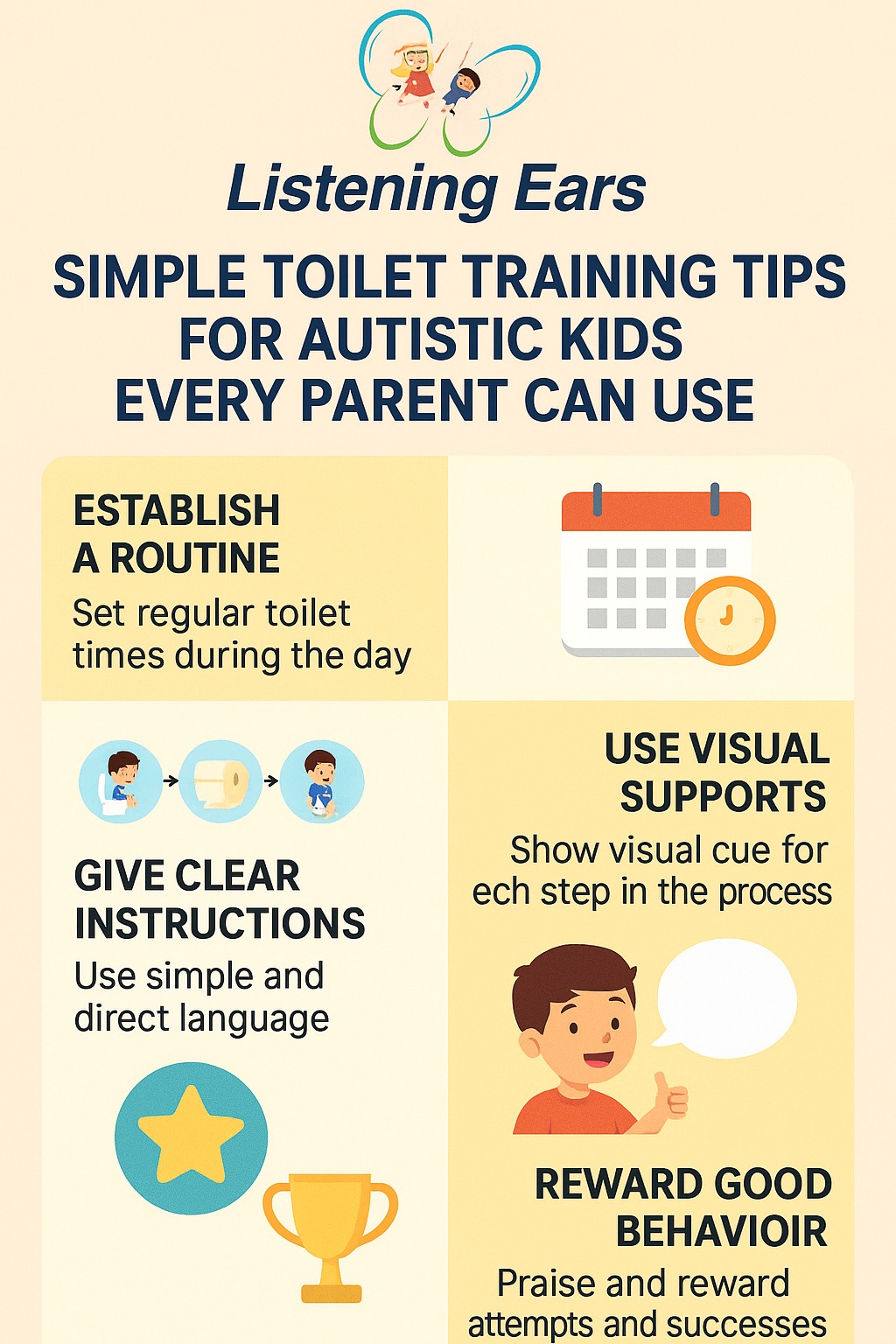
- Start initially by making a note of the diet and the water intake of the child. These affect toileting and bowel movements.
- Then a schedule where the time between water intake and when the child urinates, should be noted. Then a schedule should be drawn up corresponding to the findings.
- Initially six toilet seats can be scheduled. These must be planned around the usual routine. Changes must be minimal.
- Next would be teaching the child to know the difference between wet and dry.
- Teach the child the process, use flash cards, show videos and then follow with a practical demonstration of how to go to the toilet. Include steps and follow these steps consistently with every visit.
- Communication is a vital part of ensuring the success of this process. Establishing a means of communication, either by using a visual chart, hand gestures, or specific words to indicate the need to go to the toilet will be helpful. These child specific methods must be used at all settings, school, home or outdoors
- Identify a reward that the child will look forward to after successful toilet trips. Only use this reward in relation to toileting practices. Do not use it to reward any other behavior. Inform the teacher, therapist, whoever might be involved in this process that the reward must be given with successful completion of a toilet trip without fail.
- According to the planned schedule, take the child to the toilet, follow all steps in that order. Wait for the decided amount of time, then only let the child leave. (For eg: making the child sit on the toilet seat for 5 mins, every 1.5 hours whether or not he/she urinates. Potty trips require a longer sit down, so making the child sit for about 10 mins is required)
- Give the child a reward after successful toilet trips. Rewards along with social praise are more effective.
- Repeat the same process till the child is toilet trained
Toilet Training Guide for Autistic Children
| Category | Challenge/Step | Description & Action | Timing/Details |
| RESEARCH | Learning Timeline | Children with ASD learn toilet skills months or years later than peers (Tsai, Stewart, & August, 1981) | Completely normal, requires patience |
| CHALLENGES TO CONSIDER | Physical/Medical | Consult pediatrician about physical or medical causes affecting toileting | Before starting training |
| Language/Communication | Child may not be able to convey need to go due to communication barriers | Ongoing consideration | |
| Sensory Issues | Tactile defensiveness and sensory sensitivities might pose problems | Ongoing consideration | |
| Dressing Skills | Difficulty with putting on/taking off clothes before and after toilet time | May need assistance | |
| Fears | High toilet seats, flush sounds, faucet sounds might scare child. Need gradual exposure | Desensitization required | |
| Body Awareness | May not register wetness or be aware of clothing state | Requires explicit teaching | |
| Need for Sameness | Difficulty adjusting to routine changes; changing toileting habits is challenging | Minimize changes to routine | |
| Generalization | Difficulty using different toilets in various settings (home, school, outdoors) | Requires practice in multiple locations | |
| PREPARATION PHASE | Step 1: Track Diet & Water | Make note of diet and water intake – these affect toileting and bowel movements | Initial observation period |
| Step 2: Create Schedule | Note time between water intake and when child urinates. Draw up schedule based on findings | Track for several days | |
| Step 3: Plan Toilet Seats | Schedule 6 toilet visits per day around usual routine. Minimize changes | 6 times daily | |
| TEACHING PHASE | Step 4: Wet vs Dry | Teach child to know difference between wet and dry | Continuous reinforcement |
| Step 5: Teach Process | Use flashcards, videos, practical demonstrations. Follow consistent steps every visit | Visual + practical learning | |
| Step 6: Communication | Establish visual charts, hand gestures, or specific words. Use same method at all settings | Consistent across home/school/outdoors | |
| Step 7: Reward System | Identify special reward child looks forward to. Use ONLY for toileting. Inform all caregivers | Given after every success without fail | |
| DAILY PRACTICE PROTOCOL | Action 1: Scheduled Visit | Take child to toilet per schedule. Follow all steps in order | E.g., every 1.5 hours |
| Sitting Time – Urine | Child sits on toilet for designated time whether or not they urinate | 5 minutes | |
| Sitting Time – Bowel | Child sits on toilet for longer duration for bowel movements | 10 minutes | |
| Action 2: Reward | Give reward after successful toilet trips. Combine with social praise | More effective with praise | |
| Action 3: Repeat | Repeat same process consistently | Until fully toilet trained |
Simple things to keep in mind when starting toilet training:
- Eliminating the use of diapers when training commences is absolutely necessary.
- In case of unavoidable circumstances, using a diaper over the underwear is recommended so that the child feels the wetness when he/she urinates.
- If accidents occur, it is important to not tell the child off. Do not forget to appreciate and praise when accidents do not occur.
- It is very important to involve the child in the cleanup process in case of accidents. Disposing the diapers, tissues and washing hands.
- Use a visual chart in the toilet and point to the picture as you engage in each step
Learning to use the toilet can take time for children with autism — and that’s completely okay. Every child learns in their own way and at their own pace. What matters most is being patient, kind, and practicing every day. Small steps and gentle routines can make a big difference.
Remember, accidents happen and that’s part of learning. Always praise your child when they try, and make toilet time calm and happy.
If you ever need extra help or guidance, Listening Ears is always there to support families. Their friendly therapists can teach easy toilet training methods and help children feel more confident and comfortable.
FAQ's
At what age should children with autism start toilet training?
Children with autism may start learning later than other kids, sometimes months or even years later. Every child is different, so start when your child seems ready.
Why does toilet training take longer for kids with autism?
Kids with autism may have trouble noticing body signals, changes in routine, or sensory issues like being scared of the flush sound or feeling the toilet seat. This can make learning slower, and that’s completely normal.
How can I know my child is ready for toilet training?
Look for signs like showing interest in the toilet, staying dry for a few hours, or telling you when they need to go. Even small signs of awareness are a good start.
Should I punish my child for accidents?
No! Accidents are part of learning. Always stay calm, praise your child when they try, and involve them in cleaning up gently.
How can I help my child understand when it’s time to go?
Use simple ways to communicate, like visual charts, hand gestures, or special words. Consistency at home, school, and outdoors helps a lot.
How often should I take my child to the toilet?
Follow a schedule based on your child’s routine, diet, and water intake. Start with a few toilet visits per day and gradually increase as they learn.
What about rewards?
Give small rewards your child likes after successful toilet trips. Combine rewards with praise. Use rewards only for toilet success, not for other behaviors.
Where can I get help if toilet training is hard?
Therapists and autism specialists can guide you with strategies and routines. Listening Ears provides friendly, expert support for toilet training and other daily skills for children with autism.